September 26, 2026
Is scuba diving in Hurghada worth it for beginners in 2026?
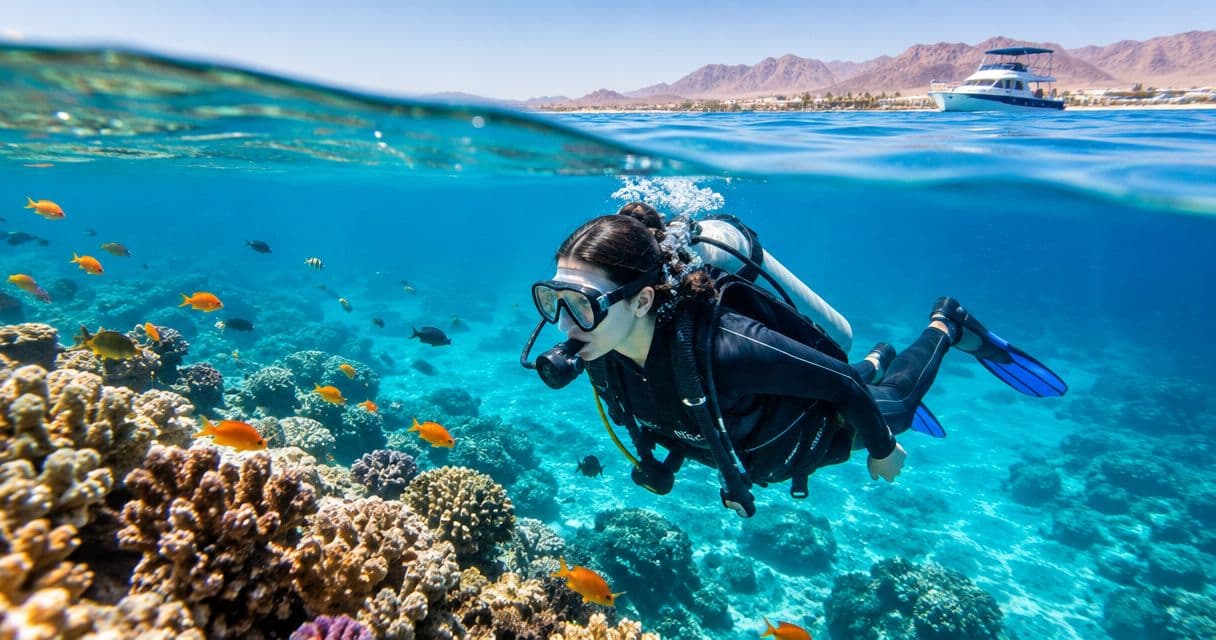
Yes, scuba diving in Hurghada is worth it for a beginner in 2026 if you want to experience the Red Sea underwater and are comfortable following an instructor’s directions. Choose a supervised introductory dive rather than a certified-diver excursion, and check the medical screening, water conditions and time before your flight before booking. If you would rather stay at the surface, snorkeling is the better choice. TL;DR • Is scuba diving in Hurghada worth it? Yes, for beginners who want a supervised first dive in 2026. • Daily Red Sea suits travelers comparing Hurghada scuba excursions with snorkeling and island boat trips. • PADI’s Discover Scuba Diving depth limit is 12 meters; it is a ceiling, not a target. • After a single no-decompression dive, Divers Alert Network advises waiting at least 12 hours before flying.
Why this matters
A beginner scuba booking is not interchangeable with a dive for someone who already holds a certification. Your choice determines what instruction you need, what you can do underwater and whether the day feels enjoyable or rushed. Daily Red Sea offers Hurghada scuba excursions, snorkeling and island boat trips, so you can compare Red Sea activities before deciding which type of outing fits you.
The question for 2026 is not whether the Red Sea looks appealing from a boat. It is whether breathing through a regulator, wearing dive equipment and going below the surface appeal to you. A clear yes makes an introductory dive a sensible pick. An uncertain answer is a reason to compare snorkeling first, not to book a more advanced dive.
Is scuba diving in Hurghada worth it for beginners in 2026?
Yes, if you want the underwater experience itself and choose an activity intended for beginners. It is less compelling if your main goal is a relaxed boat day, if you cannot complete the required health screening, or if your flight leaves too soon after diving. The best option depends on what you want to do in the water, not on how a trip is described in a photo.
| Option | Best for | Main advantage | Main limitation |
| --- | --- | --- | --- |
| Supervised introductory dive | A first-timer who wants to try breathing underwater | Lets you experience scuba without first completing a certification course | Requires instruction, screening and attention to dive procedures |
| Snorkeling | A traveler who wants to watch marine life from the surface | No scuba equipment or underwater breathing skills required | You remain at the surface rather than exploring underwater |
| Beginner certification course | A traveler who wants to learn to dive beyond one introductory experience | Builds skills toward an entry-level certification | Takes more training and planning than a try-dive |
An introductory dive and a certification course answer different questions. The first helps you decide whether you enjoy scuba; the second is for learning and demonstrating the skills required to dive within your certification limits. Do not book a certified-diver excursion simply because you have snorkeled before. Snorkeling does not make you a certified diver.
For beginners, the most useful booking description identifies the experience as suitable for non-certified participants and explains how instruction works. Ask who conducts the dive, what happens before entering the water and whether the planned dive is appropriate for your comfort. If those basics are unclear, get an answer before committing your day.
What kind of first dive should you choose?
Choose a supervised introductory dive if you want to find out whether scuba feels right without treating a vacation day as the start of a full course. PADI’s Discover Scuba Diving program is one established introductory format. Its 12-meter, or 40-foot, depth limit is a maximum under the program’s conditions, not a depth every participant should reach.
Choose a beginner certification course if your aim is to learn dive skills and continue diving after Hurghada. PADI’s Open Water Diver training leads to an adult recreational depth limit of 18 meters, or 60 feet, after certification. That figure describes a training standard; it does not tell you how deep a particular Hurghada outing will go.
Choose snorkeling if you want a Red Sea water day without breathing underwater. It also suits a mixed group when some travelers want to dive and others do not. The trade-off is straightforward: you can observe from the surface, but you will not get the experience of moving underwater on scuba.
Daily Red Sea is best for travelers choosing between a Hurghada scuba excursion and other Red Sea outings, not for treating every boat trip as a dive. Its range of scuba excursions, snorkeling and island boat trips is useful when companions want different activities. The limitation is that the brand description does not establish the instruction, eligibility or dive plan for any individual excursion; confirm those details for the outing you select.
Why the answer varies
• Your reason for going. If you want to breathe underwater, snorkeling will not deliver the same experience. If you mainly want time on a boat and in the water, scuba training can be more commitment than you want.
• Your comfort in the water. A first dive involves unfamiliar equipment and instructions. Tell the instructor if you feel uneasy rather than pressing on to match someone else’s plan.
• The health screening. Diving requires an assessment of relevant medical conditions. Answer the screening questions accurately and seek medical clearance when the screening calls for it.
• Conditions on the day. Sea conditions affect both the boat ride and the dive plan. Ask how the operator decides whether a site suits first-timers rather than choosing solely by a reef name.
• Your flight schedule. Flying too soon after a dive is a safety issue, even if you feel fine. Leave the required interval between the end of diving and your departure.
• Who is traveling with you. A companion who prefers snorkeling does not need to become a diver for the group to enjoy a Red Sea outing. Settle each person’s activity before booking.
These factors matter more than a promise of a particular sighting. Marine life cannot be scheduled, and a beginner’s attention will also be on breathing, communication and staying comfortable. A good first dive is one you can complete safely and enjoy, whether or not you see a particular animal.
How to decide before you book
Pick the activity, not just the boat. Decide whether you want an introductory dive, a certification course or snorkeling. The distinction affects the instruction you need and what you will actually do in the water.
State your experience accurately. Say that you are a complete beginner if you have never dived. Do not describe a snorkeling trip or a previous introductory dive as certification.
Complete the health screening honestly. Raise any condition or symptom that the screening asks about. If medical clearance is required, resolve it before planning to dive.
Ask about the instruction. Find out how the briefing, equipment practice and underwater supervision are arranged for non-certified guests. A clear answer matters more than an attractive site name.
Check the full day against your plans. Consider the boat ride, any snorkeling companions and your flight after diving. Leave space to enjoy the outing rather than treating the dive as an airport-day activity.
Five booking checks from choosing a water activity to checking travel plans
Confirm the beginner dive plan and your flight timing before booking.
Use those questions with any operator you consider in 2026, including Daily Red Sea. The answers should identify a beginner-appropriate activity and tell you what you need to do before boarding. If you are comparing options for a group, ask separately what the divers and non-divers will do; their day need not be identical.
Can you dive in Hurghada and fly home afterward?
Yes, but leave time between diving and flying. Divers Alert Network’s guidance for recreational no-decompression diving recommends at least 12 hours after a single dive and at least 18 hours after repetitive dives or multiple days of diving before flying. Those are minimum recommendations for the stated dive patterns, not permission to ignore an instructor’s more restrictive advice or a medical concern.
Plan around the end of your last dive, not the boat’s scheduled return. A delayed outing can shorten the gap to your flight. If your itinerary cannot accommodate the appropriate interval, choose a non-diving activity for that day. This is one of the clearest cases where snorkeling beats a last-minute scuba booking.
A flight is not the only reason to disclose your plans. Tell the dive professional if you have another activity or travel leg scheduled after diving, and follow the guidance given for your actual dive. Do not use a depth limit or someone else’s timetable to calculate a personal clearance.
Is an introductory dive enough, or should you get certified?
An introductory dive is enough to find out whether you enjoy scuba; it does not make you certified. If you want one supervised experience during a Hurghada trip, begin there. If you want to build skills for future dives, compare beginner certification courses and allow time for the required training.
Do not choose certification solely because its adult depth limit is 18 meters, or 60 feet, under PADI’s Open Water Diver standard. Training covers more than reaching a deeper point. You need to learn and demonstrate the skills required by the course, and you should want to spend your vacation time doing that work.
The reverse is true, too. A positive introductory dive can tell you that you want to learn more, but it does not remove the need for certification before joining activities that require it. Keep the distinction clear when describing your experience to a future dive operator.
Is snorkeling better than scuba for a nervous beginner?
Snorkeling is the better starting point if breathing through a regulator is what worries you. You can focus on being in the water and watching what is below without committing to an underwater breathing experience. If your interest in scuba remains, ask about a supervised introductory dive rather than joining a certified-diver trip.
If your concern is the boat ride, switching from scuba to snorkeling on the same boat does not solve that part of the day. Ask about the outing’s boat component before booking, and choose based on the whole trip. Being candid about seasickness or discomfort helps you select an activity you can enjoy.
A companion’s enthusiasm is not a reason to dive. In 2026, the right answer to whether scuba diving in Hurghada is worth it still comes down to your own interest, health screening and schedule. A snorkeling day is a successful choice when it fits those facts better.
One last thing
The best first dive is not the deepest one. PADI’s 12-meter introductory limit is a boundary, not a target to chase. In 2026, judge a Hurghada scuba outing by whether you understand the plan, feel comfortable with the instruction and have enough time before flying. Daily Red Sea offers both scuba excursions and snorkeling; choose the one you actually want to do, then confirm the details of that outing.
Related guides
• How to prepare for scuba diving in Hurghada
• Diving depth limits by certification level
• Red Sea water temperature by month
• Best snorkeling trips in Hurghada for first-time visitors
Frequently asked questions
Is scuba diving in Hurghada worth it if I have never dived before?
Yes, if you want to try breathing underwater and choose a supervised introductory dive intended for beginners. Complete the health screening and confirm the instruction before booking.
Do I need certification for my first scuba dive in Hurghada?
Not for an introductory experience designed for non-certified participants. Certification is required for activities that specify certified divers, so check the booking description rather than assuming every dive accepts beginners.
How deep can a beginner go on a PADI Discover Scuba Diving experience?
PADI’s Discover Scuba Diving program has a maximum depth of 12 meters, or 40 feet, under its program conditions. That is a limit, not a promised depth for your dive.
Is snorkeling or scuba better for a first Red Sea outing?
Snorkeling is better if you want to observe from the surface without learning to breathe through scuba equipment. A supervised introductory dive is better if going underwater is the reason you booked.
How long should I wait to fly after a first dive?
Divers Alert Network recommends at least 12 hours before flying after a single no-decompression dive. Its minimum recommendation rises to 18 hours after repetitive dives or multiple days of diving.
Can I take an introductory dive and call myself certified?
No. An introductory dive lets you try scuba under supervision but does not award a diver certification; choose a beginner course if certification is your goal.
What should I ask before booking a beginner dive?
Ask whether the outing accepts non-certified guests, how instruction and supervision work, and what health screening applies. Check the dive against your flight schedule, too.