September 21, 2026
Red Sea water temperature by month 2026
The Red Sea off Hurghada runs from 21°C (70°F) in February, the coldest month, up to 30°C (86°F) in August, the warmest — a swing of 9°C across the year that decides what you wear in the water and which trip you book. TL;DR • Red sea water temperature by month in 2026 ranges from 21°C (70°F) in February to 30°C (86°F) in August. • The annual average sits near 26°C (79°F), warm enough for snorkeling without a wetsuit from June through October. • December through March is the only stretch where a 3-5mm wetsuit makes a real difference on longer dives. • August and September are the warmest months but also the busiest for boat trips out of Hurghada.
Why this matters
Water temperature is the single biggest variable in how a Red Sea trip actually feels. A diver in a shorty wetsuit in February is cold within 30 minutes; the same diver in August barely needs neoprene at all.
Anyone planning Hurghada snorkeling and diving trips around a specific month should check this table before booking gear or a boat slot — not after landing at the resort and realizing the water is colder than the beach felt.
Red sea water temperature by month
The table below tracks average sea-surface temperature for the Hurghada coast across the year, based on multi-year averaged sea-surface data for the Red Sea. Depth, wind, and distance from shore shift the number a degree or two either way — reef walls at 20 meters run cooler than the shallows where most snorkeling happens.
| Month | Avg water temp (°C) | Avg water temp (°F) | Wetsuit guidance |
|---|---|---|---|
| January | 22°C | 72°F | 3-5mm recommended |
| February | 21°C | 70°F | 3-5mm recommended |
| March | 22°C | 72°F | 3mm useful |
| April | 24°C | 75°F | 3mm or shorty |
| May | 26°C | 79°F | Shorty or rash guard |
| June | 28°C | 82°F | Rash guard, no wetsuit needed |
| July | 29°C | 84°F | Rash guard, no wetsuit needed |
| August | 30°C | 86°F | Rash guard, no wetsuit needed |
| September | 29°C | 84°F | Rash guard, no wetsuit needed |
| October | 28°C | 82°F | Rash guard, no wetsuit needed |
| November | 26°C | 79°F | Shorty or rash guard |
| December | 24°C | 75°F | 3mm or shorty |
| Annual average | 26°C | 79°F | Reference row for the whole year |
August leads the year at 30°C (86°F); February trails at 21°C (70°F) — an 9-degree Celsius spread between the two ends of the calendar. May through October all sit at or above 26°C (79°F), which is the point where most divers stop needing exposure protection beyond a rash guard.
Methodology: figures reflect averaged sea-surface temperature readings for the Hurghada coastal zone across multiple years, rounded to the nearest whole degree. One limitation worth naming directly — surface readings near a beach run warmer than open water a kilometer out, and a reef wall at depth can run 1-2°C cooler than the number in this table.
How to use these benchmarks
• Booking a winter trip (December-March): budget for a 3-5mm wetsuit on any dive longer than 30 minutes; snorkeling still works fine in a rash guard for shorter sessions.
• Booking peak summer (July-September): water sits at 28-30°C (82-86°F) — comfortable enough that many snorkelers skip exposure gear entirely, but this is also when best snorkeling trips in Hurghada get booked out fastest.
• Shoulder months (April, May, October, November): the 24-26°C (75-79°F) range is the sweet spot most divers rate as most comfortable — warm enough for long sessions, cool enough to avoid the August crowds.
• New or nervous swimmers: pick a month where the table shows 26°C (79°F) or higher; colder water makes snorkeling feel more physically demanding, which matters more for a first-timer than an experienced diver.
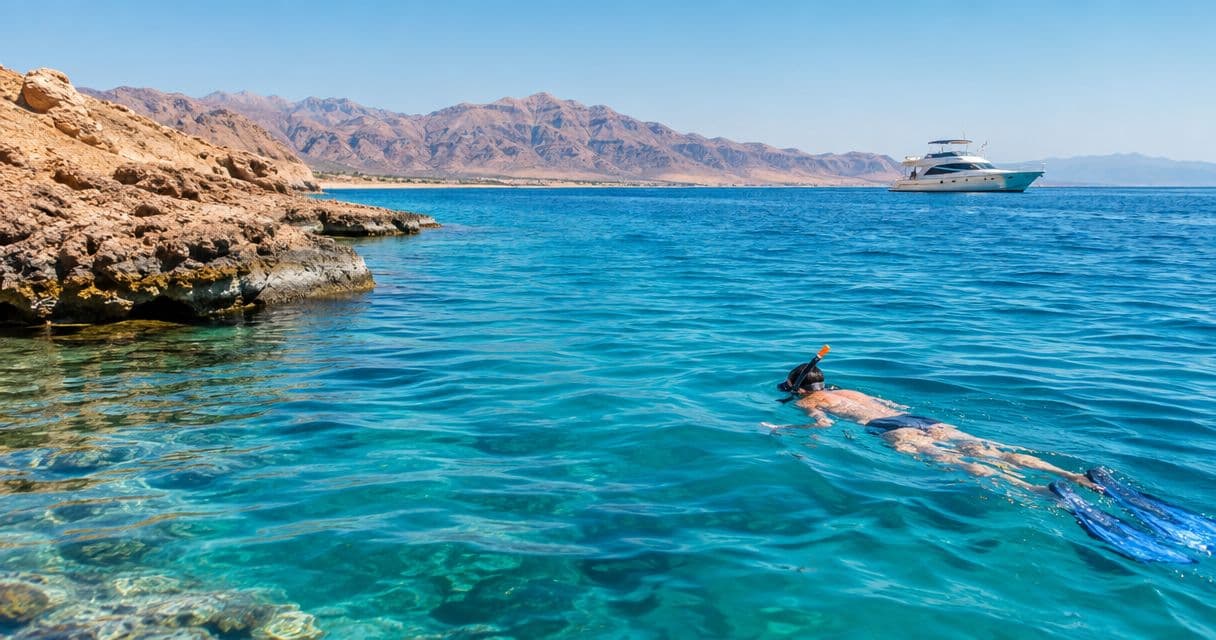
Snorkeler over a shallow Red Sea coral reef in warm clear water
Warm-season months are when most first-time snorkelers skip a wetsuit altogether.
Divers planning a longer stay should also prepare for scuba diving in Hurghada with the right exposure gear for whichever month they land in — the same trip in February and August calls for a different kit bag.
Water temperature and the diving calendar
Temperature is only half the planning picture. Visibility, wind, and crowd levels shift on a different schedule than temperature does, which is why the warmest month isn't automatically the best month.
• June-August: warmest water (28-30°C / 82-86°F), busiest boats, higher demand for off-season excursion deals in Hurghada as operators try to fill slower midweek slots.
• September-November: water still holds at 26-29°C (79-84°F) with fewer crowds — often the best value window of the year.
• December-February: coldest water (21-24°C / 70-75°F), calmer seas most days, and the season when liveaboard diving trips from Hurghada run some of their clearest visibility of the year despite the cooler temperature.
Verdict: for comfort without a wetsuit, May through October is the window; for the clearest, quietest water, accept the cold and dive December through February in a 5mm suit.
One last thing
The biggest planning mistake isn't picking a cold month — it's assuming August's 30°C (86°F) water means an easier trip. Peak warmth lines up with peak demand, so the same warm water that lets you skip a wetsuit also means booking further ahead for a boat slot.
Pick your month, then book the boat
Match the water temperature table to a snorkeling trip that fits your comfort level.
Browse snorkeling trips
Related guides
• Best snorkeling trips in Hurghada for first-time visitors
• How to prepare for scuba diving in Hurghada
• Off-season excursion deals in Hurghada for summer travelers
• Best liveaboard diving trips from Hurghada
Frequently asked questions
What is the average Red Sea water temperature by month?
It ranges from 21°C (70°F) in February to 30°C (86°F) in August, with an annual average near 26°C (79°F) across the Hurghada coast.
What is the coldest month for Red Sea water temperature?
February is the coldest month at roughly 21°C (70°F). January and March run close behind at 22°C (72°F).
What is the warmest month to swim in the Red Sea?
August is the warmest month at around 30°C (86°F), with July and September close behind at 29°C (84°F).
Do you need a wetsuit to snorkel in the Red Sea in 2026?
From June through October, water runs 28-30°C (82-86°F) and most snorkelers skip a wetsuit entirely. December through March, a 3-5mm wetsuit makes longer sessions far more comfortable.
Is the Red Sea warm enough to dive year-round?
Yes. Even the coldest month, February, averages 21°C (70°F), which is diveable in a 5mm wetsuit. Nothing in the calendar drops the water below comfortable diving range.
When is Red Sea water the most comfortable for beginners?
April, May, October, and November sit in the 24-26°C (75-79°F) range, warm enough for long sessions without the peak-summer crowds of July and August.
Does Red Sea water temperature affect visibility?
Not directly, but the two shift on different calendars — the coolest months (December-February) often bring some of the clearest visibility of the year despite the lower temperature.
How much colder is the water at depth compared to the surface?
Reef walls and deeper dive sites typically run 1-2°C cooler than the surface readings in the table above, which matters most on dives past 15-20 meters.