September 20, 2026
Diving depth limits by certification level 2026
PADI certification depth limits run from 12 meters (40 feet) for a Junior Open Water Diver aged 10-11 up to 40 meters (130 feet), the hard ceiling for recreational diving under any PADI card in 2026. Your certification level, not your experience level, is what a dive operator checks before assigning you a site. TL;DR • Open Water Diver caps at 18m (60ft); Advanced Open Water Diver doubles that to 30m (100ft). • 40m (130ft) is the absolute recreational ceiling for every PADI certification, Divemaster included. • Junior divers aged 10-11 are limited to 12m (40ft) no matter how strong their skills are. • Deep Diver Specialty is the only recreational course that unlocks the full 40m limit. • Red Sea wrecks near Hurghada often sit below 18m, so padi certification depth limits decide what you can actually see.
Why this matters
Dive centers in Hurghada assign boats and sites by certification card, not by how many logged dives you claim to have. Show up with an Open Water card and ask for a 30-meter wreck, and the answer is no — the operator's insurance and PADI's own standards won't allow it.
Knowing the exact numbers before you book means you pick the right course or the right trip the first time. If your goal in 2026 is a specific wreck or reef, the fastest way to get there is checking what it takes to get PADI certified in Hurghada before you land, not after you're turned away at the dive shop.
PADI depth limits by certification level
| Certification level | Max depth | Typical minimum age |
|---|---|---|
| Junior Open Water Diver (10-11) | 12m / 40ft | 10 |
| Junior Open Water Diver (12-14) | 18m / 60ft | 12 |
| Open Water Diver | 18m / 60ft | 15 |
| Advanced Open Water Diver | 30m / 100ft | 15 |
| Rescue Diver | 30m / 100ft | 15 |
| Deep Diver Specialty | 40m / 130ft | 15 |
| Divemaster | 40m / 130ft | 18 |
| All recreational certifications (ceiling) | 40m / 130ft | — |
Junior Open Water Divers aged 10-11 trail every other tier at 12m (40ft); Deep Diver Specialty holders and Divemasters lead at 40m (130ft), the ceiling recognized across recreational diving worldwide. That's more than a threefold spread between the youngest certified divers and the most trained recreational ones, and it doesn't move regardless of how many dives you log.
Rescue Diver sits in an odd spot on this table: it adds skills, not depth. A Rescue-certified diver stays capped at 30m unless they've separately completed Deep Diver Specialty. That surprises a lot of divers who assume the certification ladder always comes with a depth bump.
These numbers come from PADI's published Instructor Manual and Recreational Dive Planner standards, current for 2026, and they apply the same way whether you're diving the Red Sea or the Caribbean. The limitation worth naming: this is the training ceiling, not what a dive operator will actually let you do on a given day. Visibility, current, and site conditions in Hurghada regularly keep a guided dive shallower than the card technically permits.
Vertical progression of PADI certification levels from Junior Open Water to the recreational depth ceiling
Depth limits step up with certification, not with logged dive count.
Depth limits and Red Sea dive sites
Hurghada's reefs mostly sit well inside the Open Water range, which is why a first-timer's beginner scuba course in Hurghada covers most of what a new diver wants to see in a week-long trip. Wrecks are a different story — several of the region's best-known wrecks run deeper than 18m, putting them out of reach on an Open Water card alone.
That's the practical reason padi certification depth limits matter more in the Red Sea than in a lot of other diving regions: the gap between "pretty reef" and "famous wreck" is often exactly the gap between Open Water and Advanced Open Water. Divers who plan to chase wrecks during a Hurghada trip in 2026 are better off completing the upgrade before departure, since course scheduling around a packed boat itinerary eats into vacation days fast.
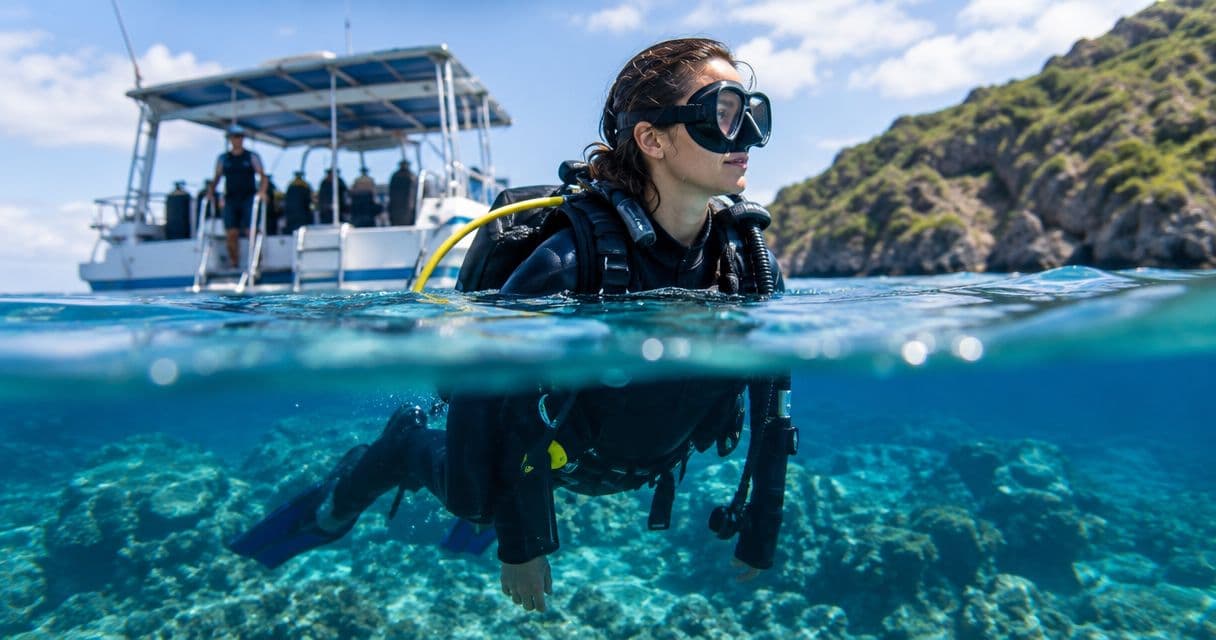
Certified diver hovering near a Red Sea coral reef at recreational depth
Most Red Sea reef dives stay comfortably within Open Water's 18m limit.
The quotable rule of thumb: if the site brief mentions a wreck deck below 18 meters, you need Advanced Open Water Diver training or better before you book it.
How to use these benchmarks
• Booking a first trip: Open Water's 18m (60ft) limit covers the majority of Hurghada reef sites — don't over-train for a reef-only trip.
• Chasing wrecks: budget for an Advanced Open Water Diver course before travel dates lock in, since the 30m limit opens most Red Sea wreck itineraries.
• Already certified: connect your PADI card to book dives in Hurghada so operators can match you to sites within your existing limit without a paperwork delay on the dock.
• Traveling with a junior diver: confirm the 10-14 age bracket and depth pairing with the operator directly — junior limits are enforced strictly and don't flex for a confident kid.
Book a dive matched to your certification
Tell the team your PADI level and depth goal for a site pick that fits.
Plan your dive
One last thing
Rescue Diver is the certification most divers misjudge on depth: it sharpens emergency skills but doesn't move the needle past 30 meters. If the extra 10 meters to reach 40 meters actually matters for your 2026 dive plans, Deep Diver Specialty — not Rescue — is the course that gets you there.
Related guides
• Advanced Open Water Diver course in Hurghada
• Best wreck diving sites near Hurghada
Frequently asked questions
What is the PADI Open Water depth limit?
An Open Water Diver's PADI certification depth limit is 18 meters (60 feet). That covers the majority of Red Sea reef dives around Hurghada without further training.
How deep can an Advanced Open Water Diver go?
Advanced Open Water Diver certification raises the limit to 30 meters (100 feet), nearly double the Open Water ceiling. It's the course most divers need before booking wreck sites.
What's the maximum depth for junior divers under PADI rules?
Junior Open Water Divers aged 10-11 are capped at 12 meters (40 feet); those aged 12-14 can go to 18 meters (60 feet). The limit is age-based and doesn't increase with skill.
Is 40 meters the absolute limit for recreational diving?
Yes, 40 meters (130 feet) is the recreational diving ceiling under PADI standards in 2026, regardless of certification level, including Divemaster. Going deeper requires technical diving training.
Do I need Deep Diver Specialty to dive Red Sea wrecks?
Only for wrecks resting below 30 meters. Many popular wrecks near Hurghada sit within Advanced Open Water's 30-meter range, but the deepest sections often need Deep Diver Specialty training.
Can a Rescue Diver certification increase my depth limit?
No. Rescue Diver certification adds emergency response skills but keeps the same 30-meter limit as Advanced Open Water. Depth increases require Deep Diver Specialty or Divemaster-level training.
What's the difference between recreational and technical diving depth limits?
Recreational PADI certifications max out at 40 meters (130 feet) with no staged decompression. Technical diving courses like Tec 40 permit planned decompression dives beyond that ceiling.
Do certification depth limits change by dive location?
The certification limits themselves stay fixed worldwide, but individual dive operators can set stricter local limits based on visibility, current, or site conditions on a given day.