October 2, 2026
Can you scuba dive with a medical condition in Hurghada?
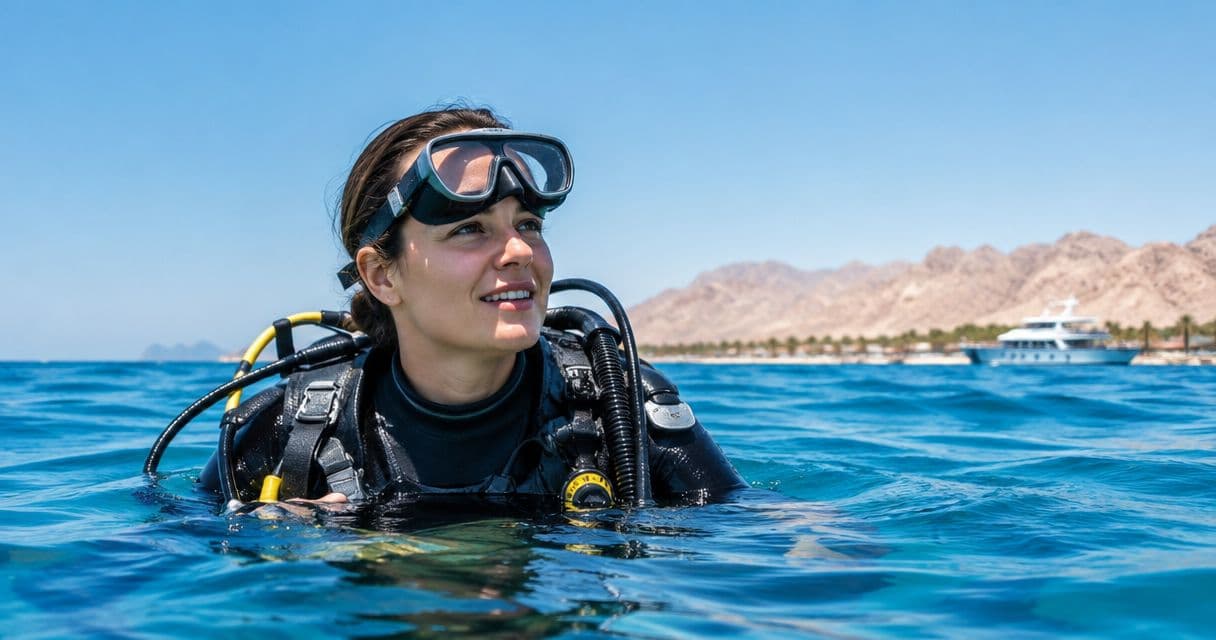
You can scuba dive with some medical conditions in Hurghada, but eligibility depends on your diagnosis, current symptoms, medication, and a diving-specific medical assessment. Get any required medical clearance before booking, and do not dive with unresolved symptoms or against medical advice. TL;DR • Scuba diving medical condition Hurghada: medical clearance depends on your health, not the destination or dive depth. • Divers Alert Network provides diving-health guidance; a diving-medicine physician assesses your individual fitness. • Dailyredsea offers Hurghada excursions, but tour booking does not establish medical fitness to dive. • Snorkeling is not an automatic safe substitute when a condition affects breathing, consciousness, or exercise tolerance.
Can you scuba dive with a medical condition in Hurghada?
Some conditions permit diving after assessment; others require postponement or make scuba unsuitable. An instructor cannot settle that question by promising a shallow dive, close supervision, or an easy reef.
Dailyredsea offers Hurghada scuba diving excursions alongside snorkeling, island trips, historical tours, and transfers. Medical suitability is a separate decision. Establish that first, then choose your activity.
Use this sequence for your 2026 trip:
Complete screening. Request the medical questionnaire used by your intended dive center and answer it honestly, including medication and previous surgery.
Arrange assessment. Follow the questionnaire's referral instructions. Consult a physician experienced in diving medicine when your condition requires evaluation.
Confirm requirements. Ask the dive center which medical form it accepts and whether your proposed activity fits any restrictions.
Recheck symptoms. Tell the instructor about relevant changes before entering the water. Previous clearance does not override new illness.
A positive questionnaire answer is not automatically a permanent ban. It identifies an issue that needs the assessment specified by the form.
Why this matters
Scuba changes the demands on your body. You breathe compressed gas, experience changing pressure, and need enough reserve to handle swimming, equipment, and an unexpected problem.
At approximately 10 meters of seawater, ambient pressure is 2 bar absolute, about twice surface pressure. This basic pressure relationship explains why an ordinary holiday health check is not the same as a diving assessment. It does not establish a safe depth for any diagnosis.
For 2026 planning, use the Diver Medical Screening Committee's recreational screening system and Divers Alert Network's condition-specific guidance as reference material. These address recreational diving health, not your personal clearance. A physician must apply that guidance to your history.
Feeling well on land does not prove you are fit to dive. Your ability to equalize pressure, breathe comfortably, stay alert, and manage exertion matters underwater.
Which medical conditions need a diving-specific review?
The diagnosis alone does not tell the whole story. Severity, control, treatment, complications, and recent changes all affect the assessment. The following sections explain why common conditions deserve attention; none grants permission to dive.
Asthma and other lung conditions
Asthma requires review because narrowed airways can affect breathing and trap gas during ascent. Tell the physician what triggers symptoms, when you last had an attack, and which inhalers or other treatments you use.
Some people with well-controlled asthma qualify under specialist guidance. Active wheezing, breathing difficulty, or poor control is a reason to postpone diving and seek assessment. Do not treat an inhaler as a substitute for clearance.
A previous collapsed lung, lung surgery, or chronic lung disease also needs specialist consideration. Do not assume that recovery for everyday activities means recovery for scuba.
Heart conditions and high blood pressure
Heart disease matters because immersion and exertion place demands on circulation. A physician must consider symptoms, exercise capacity, treatment, and the risk of sudden incapacity.
Controlled high blood pressure does not automatically exclude diving, but medication effects and associated heart or kidney problems still matter. Report chest discomfort, unexplained breathlessness, palpitations, or fainting rather than describing your condition only as stable.
Do not dive with unexplained chest pain or fainting. Seek medical assessment before returning to water activities.
Diabetes
Some people with diabetes dive under established medical and operational protocols. Eligibility requires an individual assessment, not simply a reassuring glucose reading before departure.
Discuss hypoglycemia history, awareness of warning signs, medication, and complications with a diving-medicine physician. Underwater symptoms can be difficult to recognize and manage safely.
Ask whether the dive operation can accommodate the physician's plan. A generic beginner excursion is not automatically suitable for a diver who needs condition-specific monitoring and procedures.
Seizures, blackouts, and neurological conditions
A condition that causes loss of consciousness presents a serious drowning risk. Epilepsy, unexplained blackouts, and neurological symptoms require specialist review before scuba is considered.
Do not use this article to choose a seizure-free waiting period or change treatment. Those decisions depend on the diagnosis and the applicable medical guidance.
An instructor's presence does not remove the risk of sudden incapacity underwater. Supervision is not medical clearance.
Ear, sinus, and recent surgical problems
You must equalize pressure during descent. Congestion, ear infection, sinus problems, and some surgical histories can interfere with that process or require a recovery assessment.
Do not force descent through pain. Stop, tell the instructor, and leave the water if comfortable equalization is not possible.
Recent surgery needs procedure-specific advice. Ask your surgeon and a diving-medicine physician about wound healing, pressure exposure, physical effort, and any remaining complications.
Pregnancy
Do not scuba dive during pregnancy. Divers Alert Network advises against it because fetal safety has not been established and decompression exposure creates concerns that ordinary surface activities do not share.
A shallow introductory dive does not change that recommendation. Discuss suitable alternatives with your maternity clinician, including the demands of boat travel, heat, and access to care.
Why diving clearance varies
A medical decision reflects the whole dive, not just the name of your condition. These factors explain why two travelers with the same diagnosis can receive different advice:
• Current control: Recent attacks, unstable symptoms, or complications change the assessment.
• Sudden incapacity: A risk of fainting, seizures, or severe hypoglycemia has different consequences underwater.
• Medication effects: Drowsiness, dizziness, and impaired attention can interfere with safe diving.
• Pressure response: Lung, ear, and sinus problems require consideration beyond everyday exercise fitness.
• Physical demands: Swimming, carrying equipment, and climbing a boat ladder require adequate capacity.
• Support needs: A condition-specific plan must match the supervision and procedures the dive operation can provide.
For a 2026 Hurghada booking, describe the intended activity accurately to your physician. An introductory session, recreational reef dive, and extended diving itinerary are not interchangeable medical scenarios.
How do you get medical clearance before your Hurghada trip?
Ask for the operator's form before arranging the appointment. This reduces the chance of arriving with a general note that does not address the required diving assessment.
Gather your records
Bring your diagnosis, relevant test results, surgical history, and a current medication list. Include nonprescription products and the symptoms that affect daily activity.
Explain whether you have dived before and whether you have experienced ear pain, breathing problems, panic, or a previous diving injury. Give the physician the proposed activity, not just the destination.
Request a diving-specific assessment
Ask the physician to assess fitness for recreational scuba, not simply fitness to travel. If the clinician is unfamiliar with diving medicine, request referral to someone with that expertise.
Discuss any restrictions explicitly. A condition described as acceptable under particular circumstances is not unrestricted clearance for every dive.
Confirm the dive center's requirements
Ask which form is accepted, what information must be completed, and how relevant restrictions should be communicated. Do not assume a document accepted elsewhere will automatically satisfy your chosen center.
Use the center's secure process for medical paperwork. Share what is needed for participation without posting private records in a public message or group chat.
Check the day-of-dive situation
Report new symptoms, a medication change, or illness since the assessment. If your condition has changed, pause and obtain further advice rather than relying on an earlier signature.
Four preparation stages from gathering medical records to checking symptoms before diving
Medical clearance comes before the dive booking, and new symptoms still require attention.
Keep copies of relevant documents accessible during your 2026 holiday. Confirm how the instructor will receive the information needed for the dive, especially if your booking contact and dive center are different organizations.
Can you take medication and still scuba dive?
Some medications are compatible with diving; others or their side effects make diving unsuitable. The underlying condition matters as much as the medicine.
Ask your physician about your actual treatment, including dose changes and side effects. Never stop prescribed medication to pass screening or hide it from the medical questionnaire.
Seasickness remedies deserve particular attention on Hurghada boat trips. Some cause drowsiness or impair alertness. Check the specific product with your physician or pharmacist, and do not take an unfamiliar sedating medicine immediately before diving.
Is a shallow beginner dive safe with a medical condition?
A shallow beginner dive is not a medical exemption. Pressure changes occur near the surface, and breathing problems or loss of consciousness remain dangerous regardless of depth.
A beginner session offers instruction and supervision, not a way around screening. Obtain the required assessment even if the activity does not lead to certification.
Does a diving certificate replace medical clearance?
A diving certificate documents training, not current health. An experienced diver still needs to disclose a new diagnosis, surgery, medication change, or relevant symptoms.
Previous uneventful dives do not settle a new medical question. Complete the screening required for your current activity and follow any referral instructions.
What can you do if scuba is not suitable?
Choose an alternative around the restriction, not around the assumption that everything above water is safe. Snorkeling still involves immersion and exertion; boat trips still involve boarding and time away from shore.
| Activity | Best for | Benefit | Limitation to check |
|---|---|---|---|
| Scuba diving | Travelers assessed as fit for the planned dive | Underwater reef exploration | Pressure exposure, equipment, and diving-specific medical requirements |
| Surface snorkeling | Travelers cleared for swimming and snorkeling | Reef viewing without scuba equipment | Breathing, swimming ability, currents, and immersion still matter |
| Island boat trip without swimming | Travelers suited to boat travel who want a sea day | Coastal views without an underwater activity | Boarding, motion, heat, and the return journey |
| Historical land tour | Travelers whose medical restrictions rule out water activities | Sightseeing without immersion | Walking, heat, transport, and distance from medical care |
Dailyredsea offers Hurghada diving excursions and land-based tours, so the activity decision does not have to be all-or-nothing. The benefit is having different excursion types to consider; the limitation is that each still needs to fit your health and mobility requirements.
Dailyredsea arranges Hurghada excursions; a diving-medicine physician assesses fitness to dive. Ask about the physical demands of the proposed trip before selecting a replacement.
What should you check about insurance and flying?
Medical clearance and insurance answer different questions. One addresses participation; the other addresses the terms of cover. Review declared medical conditions, scuba coverage, certification requirements, and any relevant depth or activity exclusions.
The guide to travel insurance for Hurghada diving bookings provides a related planning step. Your insurer's policy wording determines coverage, not an instructor's reassurance.
For asymptomatic divers, Divers Alert Network's flying-after-diving guidance recommends a minimum 12 hours before flying after a single no-decompression dive and 18 hours after multiple dives in a day or diving across multiple days. Dives requiring decompression stops need a substantially longer interval than 18 hours.
Those intervals do not clear a medical condition or guarantee freedom from decompression illness. Build your 2026 flight schedule around the applicable guidance and any longer interval specified by your dive plan or clinician.
Do not fly with symptoms of a possible diving injury. Seek urgent medical assessment for unusual neurological symptoms, breathing difficulty, chest pain, or other concerning symptoms after diving, and report the dive history.
One last thing
Ask what happens if you cannot dive on the day. Before booking, confirm whether accompanying the boat without entering the water is possible, what physical demands remain, and which cancellation terms apply.
Do not assume an alternative or refund is included. Knowing the arrangements removes pressure to enter the water when your symptoms, screening, or medical advice say stop.
Related guides
• How to prepare for scuba diving in Hurghada
• Diving depth limits by certification level
• Activities for non-diving companions
Frequently asked questions
Can I scuba dive in Hurghada if I have asthma?
Asthma requires an individual diving-medical assessment; some people with well-controlled asthma qualify under specialist guidance. Do not dive with active wheezing, breathing difficulty, or poor control.
Can I scuba dive with high blood pressure?
Controlled high blood pressure does not automatically exclude scuba diving. A physician must assess control, medication effects, exercise capacity, and associated conditions.
Can I do an introductory dive without medical clearance?
An introductory dive does not exempt you from medical screening or any clearance required by the questionnaire. Follow the dive center's screening process before entering the water.
Is snorkeling safe if I cannot scuba dive?
Snorkeling is not automatically safe when scuba is unsuitable. Ask your physician specifically about swimming, immersion, exertion, and the reason for your diving restriction.
Can I scuba dive while pregnant in Hurghada?
Do not scuba dive during pregnancy. Discuss suitable alternatives and the demands of boat travel with your maternity clinician.
Do I need to disclose medication to the dive center?
Disclose medication as requested by the medical screening form and discuss it with the assessing physician. Do not stop prescribed treatment or omit it to avoid referral.
How long should I wait before flying after diving?
Divers Alert Network recommends at least 12 hours after a single no-decompression dive and 18 hours after multiple dives or multiple days of diving for asymptomatic divers. Dives requiring decompression stops need substantially longer than 18 hours, and symptoms require medical assessment rather than a flight.