2026年8月29日
Astrophotography Workshop Desert Safari Hurghada 2026
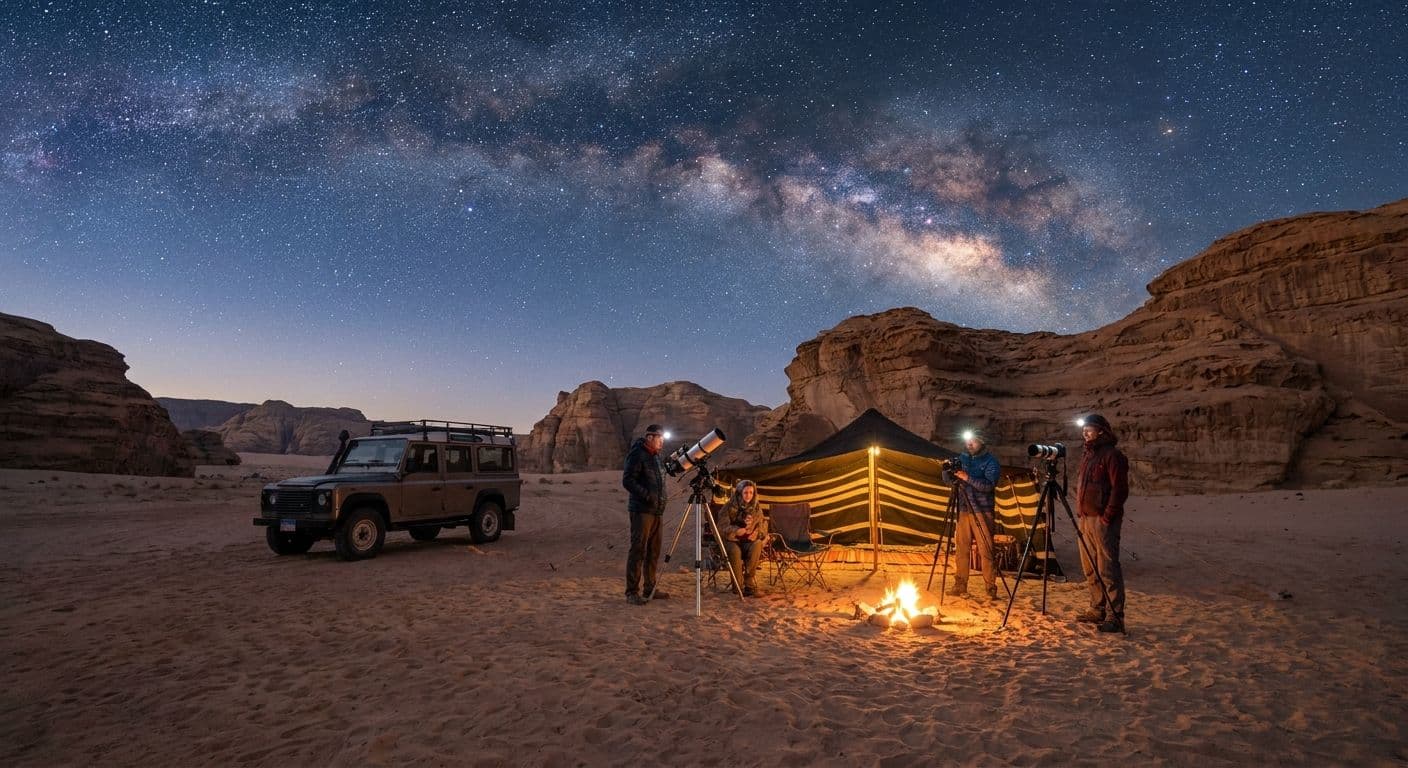
Astrophotography workshop desert safari trips in Hurghada pair a guided night drive into dark desert with hands-on help getting sharp Milky Way and star-trail shots, built for travelers who want real images without owning a tripod, an intervalometer, or years of manual-mode practice. This segment differs from a standard sunset safari in three ways: timing around the moon phase matters more than sunset color, the shoot site has to sit well outside Hurghada's resort light dome, and the guide's photography knowledge matters as much as the vehicle. TL;DR • An astrophotography workshop desert safari in Hurghada works best on a new-moon week, 20+ minutes past the last resort lights. • Manual camera settings (f/2.8 or wider, ISO 1600-3200, 15-20 second exposures) get usable Milky Way shots without extra gear. • Daily Red Sea's night desert safari for photographers builds in dedicated shooting stops instead of one quick photo break. • Booking an overnight Bedouin camp stay for stargazers doubles your shooting window versus a single evening run.
Why this matters for astrophotographers
Hurghada sits far enough from Cairo's light pollution that a 30-45 minute drive into open desert gets you genuinely dark sky, which is the single biggest variable in whether a Milky Way shot works at all. Moon phase controls this more than weather does in 2026's dry season: a full moon washes out the core of the Milky Way even under a clear sky, while a new-moon week turns an average phone shot into something worth printing.
Most general desert safari itineraries build in one 10-minute stop for phone photos at sunset, then move on to dinner and dancing. That schedule doesn't work for anyone trying to capture star trails, which need 30-60 minutes of stationary shooting, or a foreground-lit Milky Way panorama, which needs time to dial in focus manually in near-total darkness.