13 września 2026
Red Sea Scuba Diving Destinations Ranked by Difficulty 2026
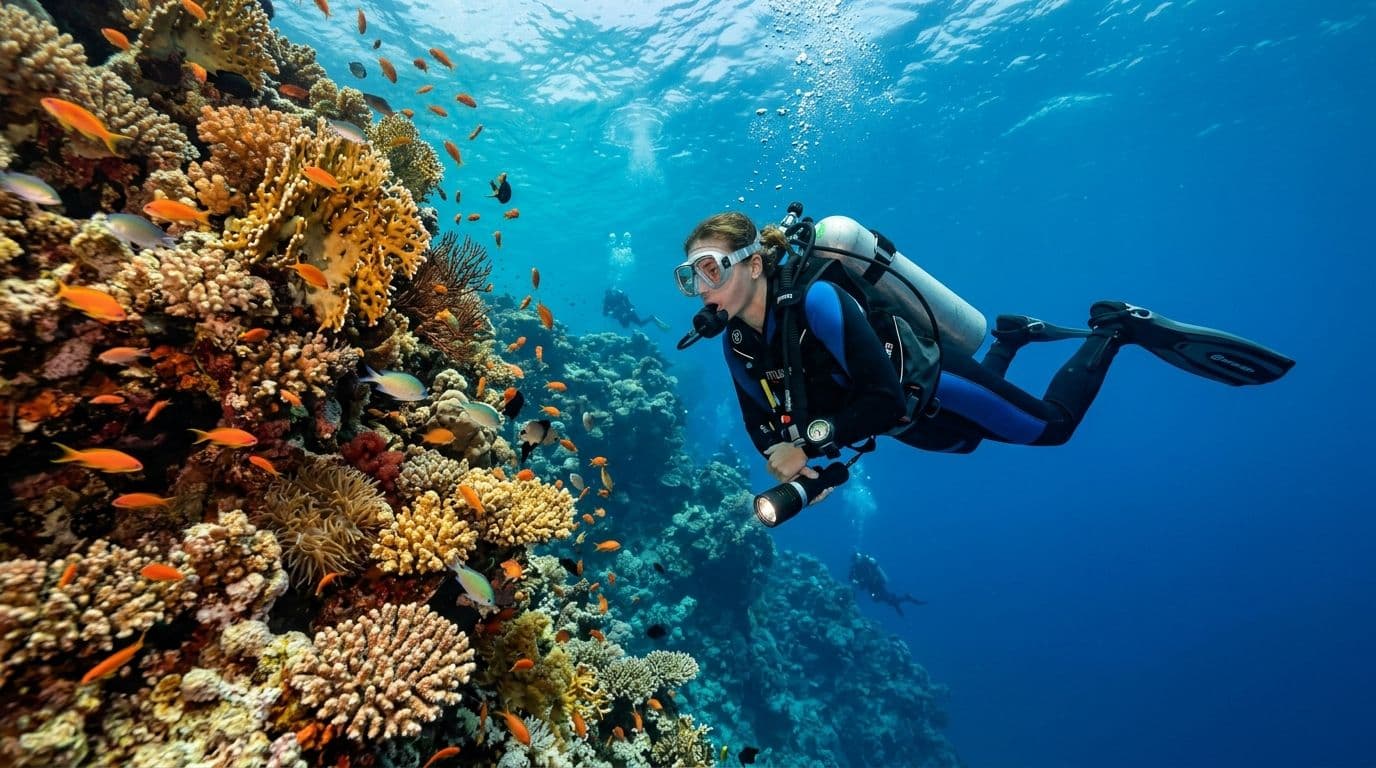
Not every Red Sea dive site suits every logbook. Some reefs sit in 6 meters of glass-calm water perfect for a first fin-kick; others hide 30-meter wrecks with penetration routes that will humble a Rescue Diver. This guide ranks five Red Sea diving experiences from easiest to hardest so you book the right depth for your certification, not the one with the prettiest photo. TL;DR • Giftun Island house reefs are the easiest red sea scuba diving destinations for first-timers and Discover Scuba courses, depth 5-12m. • Panorama Reef suits fresh Open Water divers with mild current and an 12-18m wall. • Marsa Alam's drift reefs demand Advanced certification for currents and 18-25m depths. • Abu Nuhas wreck sites are the hardest red sea scuba diving destinations, reserved for experienced wreck-trained divers. • Book the tier that matches your card, not your ego — Daily Red Sea confirms certification level before every trip.
Why this matters
The Red Sea gets marketed as one giant reef system, but difficulty varies enormously between Hurghada's inshore islands and the offshore wreck graveyard near Abu Nuhas. Divers who jump a tier too fast burn air faster, blow their no-decompression limits, or simply panic in current they weren't ready for.
Daily Red Sea runs scuba diving trips across all five tiers out of Hurghada in 2026, and the single biggest booking mistake is picking a site by Instagram appeal instead of logbook hours. This ranking fixes that by sorting destinations the way a dive instructor would: by depth, current, and skill required, not by scenery.
What makes a Red Sea dive destination easy or hard
• Depth range — anything under 12m is forgiving; past 25m, nitrogen loading and air consumption start working against you.
• Current strength — drift sites move you along the reef whether you're ready or not; house reefs barely move at all.
• Entry style — shore or boat-ladder entries are easier than negative entries or live-boat drops.
• Visibility and navigation — wreck interiors and night dives remove visual reference points beginners rely on.
• Required certification — some sites are legally off-limits without Advanced Open Water or a wreck specialty card.
• Marine life encounters — sites with pelagics (sharks, rays) reward calm buoyancy control, which beginners haven't built yet.
Red Sea scuba diving destinations at a glance
| Destination | Best for | Depth range | Standout feature | Key limitation |
|---|---|---|---|---|
| Giftun Island house reefs | First-time divers, Discover Scuba | 5-12m | Calm, shallow coral garden | Limited big marine life |
| Panorama Reef | New Open Water divers | 12-18m | Sloping wall, mild current | Can get boat traffic in high season |
| Marsa Alam reefs (Abu Dabbab area) | Advanced Open Water divers | 18-25m | Drift diving, dolphin and turtle encounters | Current can shift fast, needs strong finning |
| Careless Reef night sites | Experienced advanced divers | 20-30m | Night navigation, nocturnal reef life | Zero visual reference after dark |
| Abu Nuhas wreck graveyard | Wreck-certified divers | 25-30m+ | Four ship wrecks in one site | Overhead environment, strong current |
1. Giftun Island house reefs: best for first-time divers
The reefs around Giftun Island sit close to Hurghada's coastline in 5 to 12 meters of water, which is exactly why they're the standard venue for Discover Scuba Diving sessions. Entry is a straightforward boat-to-water drop, current is close to nonexistent most days of the year, and the coral garden gives new divers something to look at without any risk of drift.
Giftun Island pros:
• Shallow enough for zero decompression stress
• Calm water most of the year, good for buoyancy practice
• Standard venue for the best scuba diving courses in Hurghada for beginners
Giftun Island cons:
• Coral cover is patchy compared to offshore reefs
• Fewer large pelagic sightings than deeper sites
• Can feel crowded with snorkel boats in peak season
Best for: Discover Scuba students and first-time certified divers. Verdict: dive it now, no certification wait required.
2. Panorama Reef: best for newly certified Open Water divers
Panorama Reef steps difficulty up a notch with a sloping wall between 12 and 18 meters, mild current, and better coral structure than the inshore islands. It's a common second or third dive for divers fresh off their Open Water card, giving them wall orientation without throwing them into strong drift.
Panorama Reef pros:
• Wall diving experience without technical demands
• Better fish density than shallow house reefs
• Manageable for divers with under 20 logged dives
Panorama Reef cons:
• Boat traffic increases at midday in high season
• Visibility drops slightly compared to Marsa Alam sites
• Not ideal in stronger wind conditions
The panorama reef diving trip for certified divers runs from Hurghada year-round and works as a natural step up once the house reef stops feeling challenging.
Best for: divers with an Open Water card and fewer than 20 logged dives. Verdict: dive it once you have your certification card in hand.
3. Marsa Alam reefs: best for Advanced Open Water divers
Marsa Alam's reef system, including the Abu Dabbab area, sits deeper at 18 to 25 meters and introduces real drift current. This is where dolphin and turtle encounters get frequent, but the current can shift within a single dive, which is why Daily Red Sea requires Advanced Open Water certification or equivalent logged experience for this tier.
Marsa Alam pros:
• High probability of dolphin and turtle sightings
• Better visibility than inshore Hurghada sites
• Drift diving builds real current-handling skill
Marsa Alam cons:
• Current can strengthen with little warning
• Deeper profile shortens no-decompression time
• Not suitable for divers under 20 logged dives
Best for: Advanced Open Water divers comfortable with drift entries. Verdict: dive it with Advanced certification, hold off without it.
4. Careless Reef night dives: best for experienced advanced divers
Night diving at Careless Reef pushes depth to 20 to 30 meters in zero natural light, which changes the entire skill equation. Navigation relies entirely on dive light and compass work, and the nocturnal reef life (octopus, moray eels, sleeping parrotfish) rewards divers who can stay calm without visual reference.
Careless Reef night dive pros:
• Dramatically different marine life than daytime dives
• Builds navigation skill that transfers to any dark-water diving
• Smaller group sizes than daytime charters
Careless Reef night dive cons:
• No visual horizon reference, disorienting for the unprepared
• Requires solid buoyancy control before entry
• Not offered to divers without night diving experience
Best for: advanced divers with prior night dive logs. Verdict: wait until you've logged at least one supervised night dive elsewhere.
5. Abu Nuhas wreck graveyard: best for wreck-certified divers
Abu Nuhas holds four wrecks in one site at 25 to 30+ meters, and it's the hardest tier on this list. Current here runs stronger than anywhere else in this ranking, and the overhead environment inside wreck interiors means untrained divers risk entanglement or disorientation fast.
Abu Nuhas pros:
• Four distinct wrecks accessible from one mooring
• Serious marine life colonization on the hulls
• Genuinely advanced diving, not a marketing label
Abu Nuhas cons:
• Overhead penetration areas require wreck specialty training
• Strong current demands strong swimming ability
• Not appropriate for anyone without 50+ logged dives
Divers building toward this tier can check the best wreck diving sites near Hurghada for a fuller site breakdown before booking.
Best for: wreck-certified or highly experienced divers only. Verdict: skip this tier until you hold a wreck specialty or equivalent logged hours.
How this ranking was built
Each site was sorted against the six criteria above: depth, current, entry style, visibility, certification requirement, and marine life demands. Sites requiring less skill and lower risk sit at the top; sites demanding specialty training or heavy current sit at the bottom, regardless of how photogenic they are.
Which Red Sea dive destination should you choose?
If you're newly certified or have never dived the Red Sea, start at Giftun Island or Panorama Reef — both forgive mistakes while you rebuild muscle memory. If you're Advanced Open Water with 20+ logged dives, Marsa Alam's drift reefs are the honest next step. Night diving and Abu Nuhas wrecks stay off the table until your certification and logbook actually back the claim.
Book your Red Sea dive tier
Daily Red Sea matches your certification to the right site — no guesswork, no over-your-head bookings.
See dive trips
One last thing
The biggest gap between tiers isn't depth, it's current: Marsa Alam's drift reefs can shift speed mid-dive in a way Hurghada's inshore islands never do, and that single variable is what actually separates an Advanced-level dive from a beginner one in 2026.
Related guides
• How to prepare for scuba diving in Hurghada
• How to get PADI certified while in Hurghada
Najczęściej zadawane pytania
What is the easiest Red Sea scuba diving destination?
Giftun Island's house reefs near Hurghada are the easiest, sitting in 5 to 12 meters of calm water with minimal current, making them the standard site for Discover Scuba Diving sessions in 2026.
What is the hardest Red Sea scuba diving destination?
The Abu Nuhas wreck graveyard ranks hardest, with four wrecks at 25 to 30+ meters, strong current, and overhead penetration areas that require wreck specialty training.
Do I need Advanced Open Water certification for Marsa Alam diving?
Yes, Marsa Alam's drift reefs at 18 to 25 meters require Advanced Open Water certification or equivalent logged dive experience because current can strengthen without warning.
Is Panorama Reef good for new divers?
Panorama Reef works well for divers fresh off their Open Water card, with a 12 to 18 meter wall and mild current that builds confidence without technical demands.
How deep are Red Sea wreck dives near Hurghada?
Wreck sites near Abu Nuhas typically run 25 to 30+ meters, deep enough to shorten no-decompression time and require solid buoyancy control before entry.
Can beginners do night diving in the Red Sea?
No, night diving at sites like Careless Reef is reserved for advanced divers because navigation relies entirely on dive lights with zero natural visual reference.
What certification do I need to dive Red Sea wrecks?
Wreck sites with penetration routes typically require a wreck diving specialty or extensive logged dive experience beyond a standard Open Water or Advanced card.
Which Red Sea dive site has the calmest current?
Giftun Island house reefs have the calmest current of any tier on this list, which is why they're used for first dives and skill refreshers alike.