6. September 2026
Marsa Alam Snorkeling for First-Timers: 2026 Guide
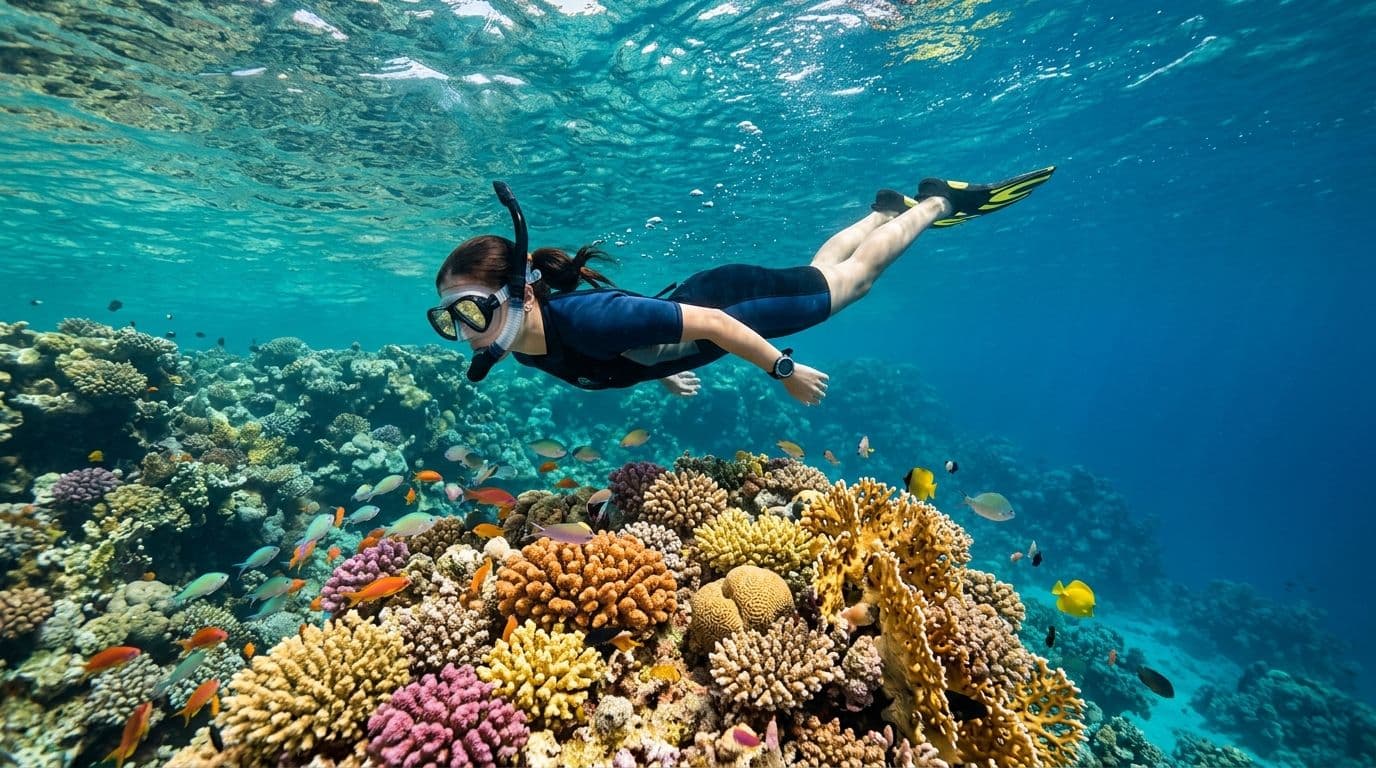
Marsa Alam snorkeling means guided reef access along Egypt's southern Red Sea coast, built for divers and non-divers who want turtles, dugongs, and coral without a certification card. First-timers face a different set of questions than repeat visitors — which reef won't overwhelm a nervous swimmer, how to avoid a sunburned back on day one, and whether a shore site or a boat trip makes more sense for someone who has never worn a mask in open water. TL;DR • Marsa Alam snorkeling suits first-timers best at Abu Dabbab and Sharm el Luli, both known for calm entry and shallow reef. • Book a guided boat trip over solo shore snorkeling for your first Red Sea outing in 2026 — briefings cut wasted time in the water. • Mask-fit and breathing practice on land beats improvising it after you've already jumped in. • Morning trips (before 10am) beat afternoon ones for visibility and calmer wind on most Marsa Alam reefs. • Daily Red Sea runs guided snorkeling day trips from Hurghada to Marsa Alam reefs built around beginner pacing.
Why this matters
Marsa Alam sits roughly four hours south of Hurghada by road, which means most first-time visitors are booking a full-day trip, not a casual afternoon swim. That's a longer commitment than a Hurghada island boat trip, so getting the reef choice and gear right on day one matters more here than almost anywhere else on the Red Sea coast.
A rushed first snorkel session — bad mask seal, choppy afternoon water, a reef that's too deep to see clearly — sours people on snorkeling for the rest of the trip. None of that is necessary. The fixes are cheap, mostly free, and take fifteen minutes to learn before you ever get on a boat.
Why Marsa Alam snorkeling matters for first-time visitors
First-timers search differently than experienced snorkelers. They're not asking about wall dives or current strength — they're asking "will I sink," "do I need to know how to swim," and "what happens if my mask fills with water." Marsa Alam's reef system answers those worries better than most Red Sea stops because several of its best-known sites — Abu Dabbab among them — have a shallow, sandy entry instead of a boat-side drop into deep water.