September 6, 2026
Marsa Alam Snorkeling for First-Timers: 2026 Guide
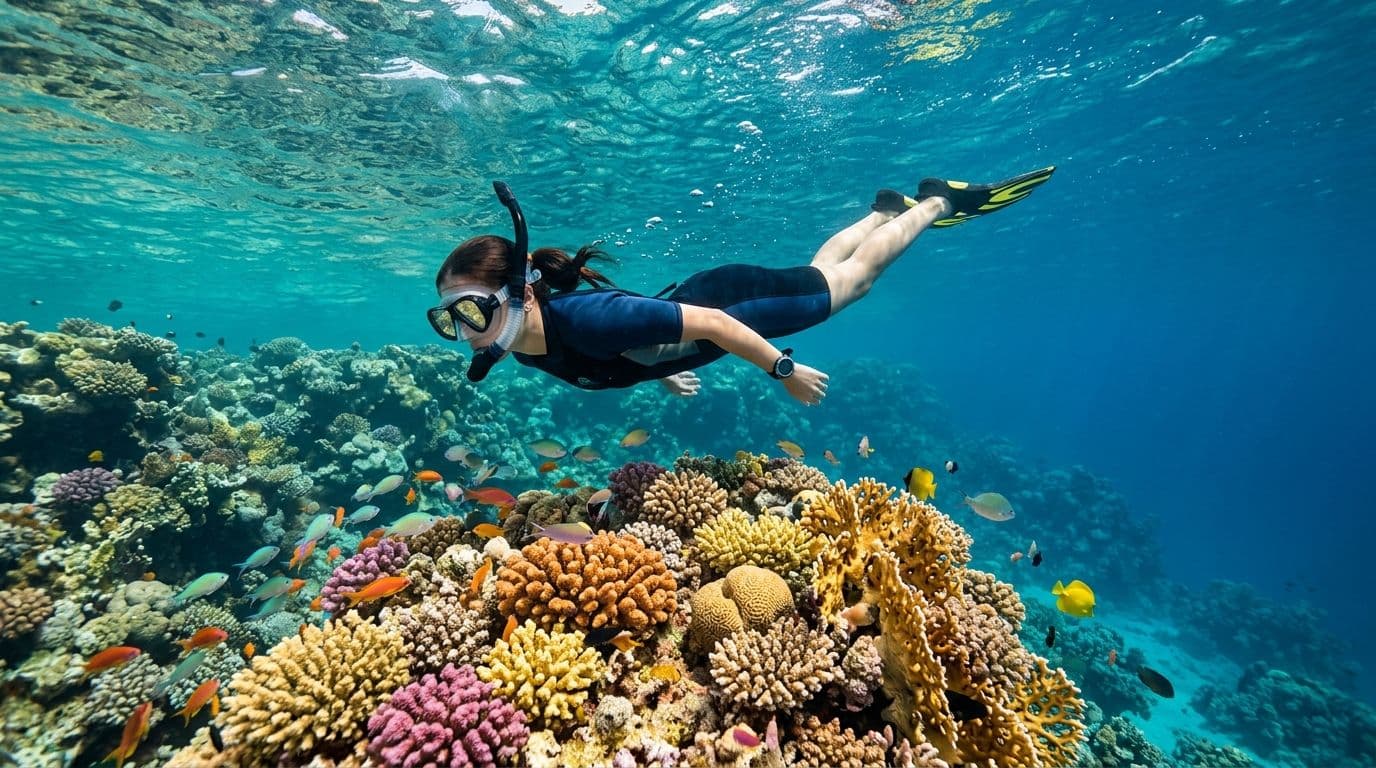
Marsa Alam snorkeling means guided reef access along Egypt's southern Red Sea coast, built for divers and non-divers who want turtles, dugongs, and coral without a certification card. First-timers face a different set of questions than repeat visitors — which reef won't overwhelm a nervous swimmer, how to avoid a sunburned back on day one, and whether a shore site or a boat trip makes more sense for someone who has never worn a mask in open water. TL;DR • Marsa Alam snorkeling suits first-timers best at Abu Dabbab and Sharm el Luli, both known for calm entry and shallow reef. • Book a guided boat trip over solo shore snorkeling for your first Red Sea outing in 2026 — briefings cut wasted time in the water. • Mask-fit and breathing practice on land beats improvising it after you've already jumped in. • Morning trips (before 10am) beat afternoon ones for visibility and calmer wind on most Marsa Alam reefs. • Daily Red Sea runs guided snorkeling day trips from Hurghada to Marsa Alam reefs built around beginner pacing.
Why this matters
Marsa Alam sits roughly four hours south of Hurghada by road, which means most first-time visitors are booking a full-day trip, not a casual afternoon swim. That's a longer commitment than a Hurghada island boat trip, so getting the reef choice and gear right on day one matters more here than almost anywhere else on the Red Sea coast.
A rushed first snorkel session — bad mask seal, choppy afternoon water, a reef that's too deep to see clearly — sours people on snorkeling for the rest of the trip. None of that is necessary. The fixes are cheap, mostly free, and take fifteen minutes to learn before you ever get on a boat.
Why Marsa Alam snorkeling matters for first-time visitors
First-timers search differently than experienced snorkelers. They're not asking about wall dives or current strength — they're asking "will I sink," "do I need to know how to swim," and "what happens if my mask fills with water." Marsa Alam's reef system answers those worries better than most Red Sea stops because several of its best-known sites — Abu Dabbab among them — have a shallow, sandy entry instead of a boat-side drop into deep water.
That matters because confidence, not swimming ability, is what stops most beginners from enjoying their first reef. A full guide to first-timer excursions in Marsa Alam covers the wider trip options; this page focuses specifically on the snorkeling piece and the mistakes that ruin it.
Pick a reef that matches your comfort level
Not every Marsa Alam reef suits a nervous first-timer, and picking the wrong one is the single biggest reason people say they "didn't like snorkeling" after one bad trip.
• Abu Dabbab — shallow sandy bay, common seagrass grazing spot, gentle entry from the beach
• Sharm el Luli — calm, protected bay with easy shore access and minimal current
• Sataya (Dolphin Reef) — boat-based, deeper water, better suited once you've done one easy session
• Avoid outer wall or drift sites on your first day regardless of what a boat crew offers as an upgrade
• Ask the operator directly how deep the entry point is before booking
Practice breathing through the tube before you get in
Most first-timers panic not from the water but from the sensation of breathing through plastic while their face is submerged. That's solvable on dry land in under ten minutes.
• Put the mask and snorkel on standing in the shallows first, not the boat
• Practice breathing through the mouthpiece with your face out of the water
• Then lower your face in while standing in water no deeper than your waist
• Clear the snorkel by exhaling sharply if water gets in — don't lift your head
• Repeat until it feels automatic, not until it feels perfect
Choose the right trip format
A shore-based session and a guided boat trip solve different problems, and picking based on price alone is a common mistake.
• Guided boat trip — best for reef variety and a crew that can reposition you if the current picks up
• Shore snorkeling — best for total beginners who want to control their own pace and exit whenever they want
• Private snorkeling groups — best for families or couples who don't want to share pacing decisions with strangers
• A trip that combines a Hurghada-to-Marsa-Alam transfer with the day trip built for divers and snorkelers together removes the logistics headache of getting there on your own
Pack gear that actually fits
Rental masks at busy tourist beaches are the number one cause of a ruined first snorkel — a leaking seal turns a calm reef into a stressful ten minutes.
• Bring your own mask if you have one, even a basic one you tested in a pool or bathtub
• Test the seal by pressing the mask to your face without the strap and inhaling gently through your nose — it should stick on its own
• Pack reef-safe sunscreen; regular sunscreen is banned or discouraged on several Marsa Alam reef sites
• Wear a rash guard instead of relying only on sunscreen for your back and shoulders
• Bring water shoes for rocky shore entries like Sharm el Luli
Time your trip around light and wind
Visibility and comfort both swing hard between morning and afternoon on this stretch of coast.
• Morning sessions, generally before 10am, have calmer wind and clearer water on most days in 2026
• Afternoon wind picks up on the exposed bays, which stirs sand and cuts visibility
• Winter months bring cooler water temperatures, so a wetsuit or rash guard matters more from December through February
• Summer (June through September) gives the warmest water but also the strongest midday sun exposure
Handle seasickness before it handles your trip
The boat ride to reach some Marsa Alam sites can run long, and seasickness ends more first snorkeling trips early than bad gear does.
• Eat a light meal before boarding — not an empty stomach, not a heavy one
• Sit or stand where you can see the horizon, not below deck
• Take motion sickness medication the night before if you know you're prone to it
• A dedicated guide to avoiding seasickness on Red Sea boat trips covers the specifics in more depth
Book with an operator that briefs beginners properly
This is where a guided trip earns its cost over a self-arranged one: a proper safety briefing before entry catches problems a first-timer won't think to ask about.
• Confirm the operator does an in-water demonstration, not just a verbal briefing on the boat
• Ask whether flotation vests or noodles are available for non-strong swimmers
• Confirm group size — a guide watching six swimmers is more attentive than one watching twenty
• Daily Red Sea runs guided Marsa Alam snorkeling trips from Hurghada built around this exact briefing standard for first-timers
Book a guided Marsa Alam snorkeling day
Small-group trips with a full beginner briefing before you enter the water.
See the day trip
Comparing the main options for first-timers
| Option | Best for | Key limitation |
|---|---|---|
| Guided boat trip to Sataya/outer reefs | Confident beginners who want reef variety | Longer boat ride, deeper entry points |
| Shore snorkeling at Abu Dabbab | Total beginners, self-paced comfort | No guide correction if form is off |
| Private small-group snorkeling | Families, couples wanting pace control | Less reef variety per trip |
| Solo self-arranged rental gear | Budget travelers confident in the water | No briefing, no safety backup |
Verdict: a guided boat trip to Abu Dabbab or Sharm el Luli with a full beginner briefing is the safest first Marsa Alam snorkeling trip in 2026 — it pairs shallow, forgiving reef with a crew trained to correct mistakes before they become a problem.
Common mistakes first-time visitors make
• Renting gear at the last minute without testing the mask seal, then blaming the reef for a bad experience
• Choosing the deepest, most photographed reef because of social media instead of one matched to swimming confidence
• Skipping the pre-trip breathing practice and panicking the moment the mask goes underwater
• Ignoring reef-safe sunscreen rules, which some Marsa Alam sites enforce and others simply suffer the ecological cost of
• Booking the cheapest large-group boat without asking about briefing quality or group-to-guide ratio
One last thing
The detail most first-timers miss: the difference between a good and bad Marsa Alam snorkeling day usually comes down to whether you practiced breathing through the snorkel on land first — not the reef, not the boat, not the gear brand. Fifteen minutes standing in shallow water before boarding fixes more problems than any equipment upgrade.
Related guides
• Snorkeling trips for non-swimmers in Hurghada
• How to prepare for scuba diving in Hurghada
Frequently asked questions
Is Marsa Alam snorkeling good for beginners?
Yes — sites like Abu Dabbab and Sharm el Luli have shallow, sandy entry points that suit first-time snorkelers better than most Red Sea reef access points. Guided boat trips with a beginner briefing reduce the risk of a bad first session.
Do I need to know how to swim to snorkel in Marsa Alam?
Basic comfort in water helps, but flotation vests and shallow shore entries make it possible for weak swimmers to snorkel safely with a guide present. Ask any operator directly whether they provide flotation support before booking.
What's the best time of day to snorkel in Marsa Alam?
Morning, generally before 10am, gives calmer wind and clearer water than afternoon sessions on most days in 2026. Afternoon wind stirs sand and cuts visibility on exposed bays.
How far is Marsa Alam from Hurghada for a day trip?
It's roughly a four-hour drive each way, which is why most first-timers book it as a full-day guided trip rather than a solo day out. A structured itinerary keeps the long transfer worthwhile.
What should I pack for my first Marsa Alam snorkeling trip?
A well-fitted mask, reef-safe sunscreen, a rash guard, and water shoes for rocky entries cover most first-timer needs. Test your mask seal before the trip, not on the boat.
Can I see turtles snorkeling at Marsa Alam?
Abu Dabbab is known specifically for seagrass beds that attract grazing sea turtles close to shore. Sightings aren't guaranteed on any trip, but the shallow bay gives snorkelers a realistic chance without a boat-based excursion.
Is a guided boat trip better than shore snorkeling for first-timers?
A guided boat trip is better for reef variety and safety backup, while shore snorkeling suits travelers who want full control over their own pace. Most nervous first-timers do better with a guide present for the first session.