9 августа 2026 г.
How to avoid seasickness on Hurghada boat trips
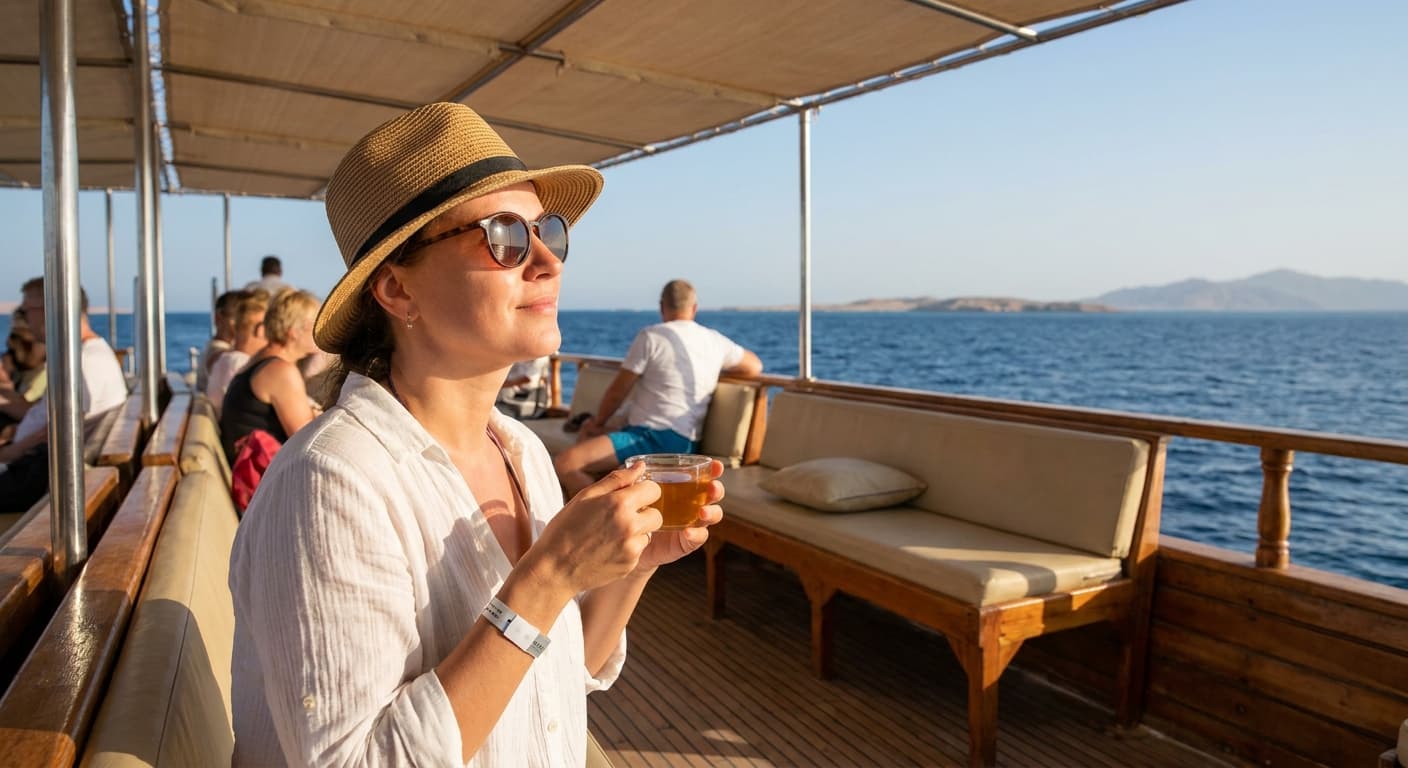
Seasickness ruins more Red Sea boat days than rough water does. Most cases come from timing, seating, and diet — not the sea itself — and every one of them is fixable before you board.
Why this matters
Hurghada's Red Sea coast is generally calmer than open-ocean destinations, but wind picks up most afternoons in 2026 just like every year before it, and a fast RIB boat moving through choppy water can still put a first-timer over the rail. Snorkeling trips make it worse because you're staring down at coral instead of the horizon. If you've booked an island boat trip and you're prone to motion sickness on ferries, cars, or planes, treat this guide as your pre-departure checklist, not an afterthought.
The good news: seasickness responds well to preparation. Timing your medication, picking the right seat, and knowing what to eat beforehand solve the problem for most travelers before the boat even leaves the marina.
What you'll need
• Over-the-counter motion sickness tablets (Dramamine, Bonine, or the local pharmacy equivalent — widely available in Hurghada pharmacies)
• Acupressure wristbands, as a low-side-effect backup or for kids
• Ginger tablets, ginger candy, or ginger tea as a mild supplement
• A light breakfast — toast, crackers, banana — eaten at least 30 minutes before boarding
• Sunglasses (helps you fix on the horizon without squinting)
• A window or open-deck seat request when you book
1. Book a boat trip with a sensible departure time
Morning slots beat afternoon slots on the Red Sea. Wind typically builds through the day, so a boat leaving the marina before 9am usually crosses flatter water than one leaving at 1pm. When you're comparing options, an island boat trip built around snorkeling stops with an early departure gives you the calmest window of the day, not just the best light for photos.