5 августа 2026 г.
Desert safari for photographers at night in Hurghada
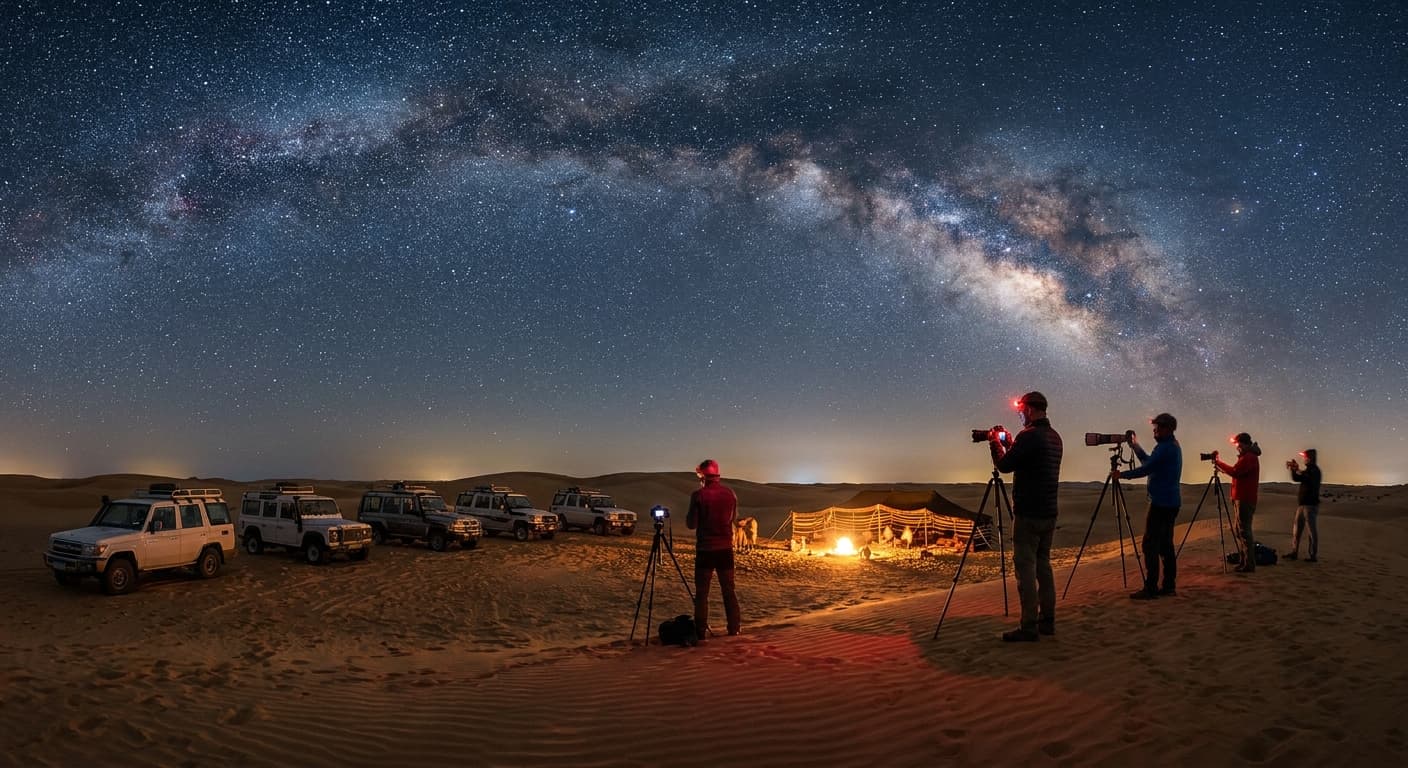
A night desert safari built for photographers needs three things a standard sightseeing tour rarely delivers: real darkness, a stop long enough for a 20-minute exposure, and a guide who won't rush you back to the truck. This guide breaks down what night desert safari stargazing in Hurghada should look like for photographers in 2026, and which tour formats actually deliver dark sky over dune-convoy noise.
Why this matters
Hurghada's hotel strip sits under enough ambient glow to wash out anything past a faint star. Drive 30 to 45 minutes into the Eastern Desert and the sky drops several classes on the Bortle scale on a clear night, dark enough to frame the Milky Way core with a basic tripod setup.
Daily Red Sea runs desert safaris out of Hurghada, and the gap between a shot worth keeping and a blurry dune photo usually comes down to how the tour is structured, not the camera in your bag. A 2026 stargazing trip needs one fixed, unhurried stop, not a 15-minute photo break wedged between quad bike laps.
Who this is for
This guide is for photographers chasing star trails, Milky Way frames, or long-exposure dune shots, not a quick phone snap of a campfire. You're bringing at least a tripod, you know your camera's manual mode, and you'd rather sit still for 20 minutes than bounce between five stops. Group-tour travelers who just want a five-minute selfie under the stars should book a standard sunset safari instead.
Distance from city light pollution
Ask how far the vehicle actually drives past the last streetlight. A camp visible from the Hurghada coastal road still carries sky glow that flattens contrast in long exposures. The farther the stop sits from the strip, the deeper the black behind the stars.