17. August 2026
Underwater photography course for scuba divers
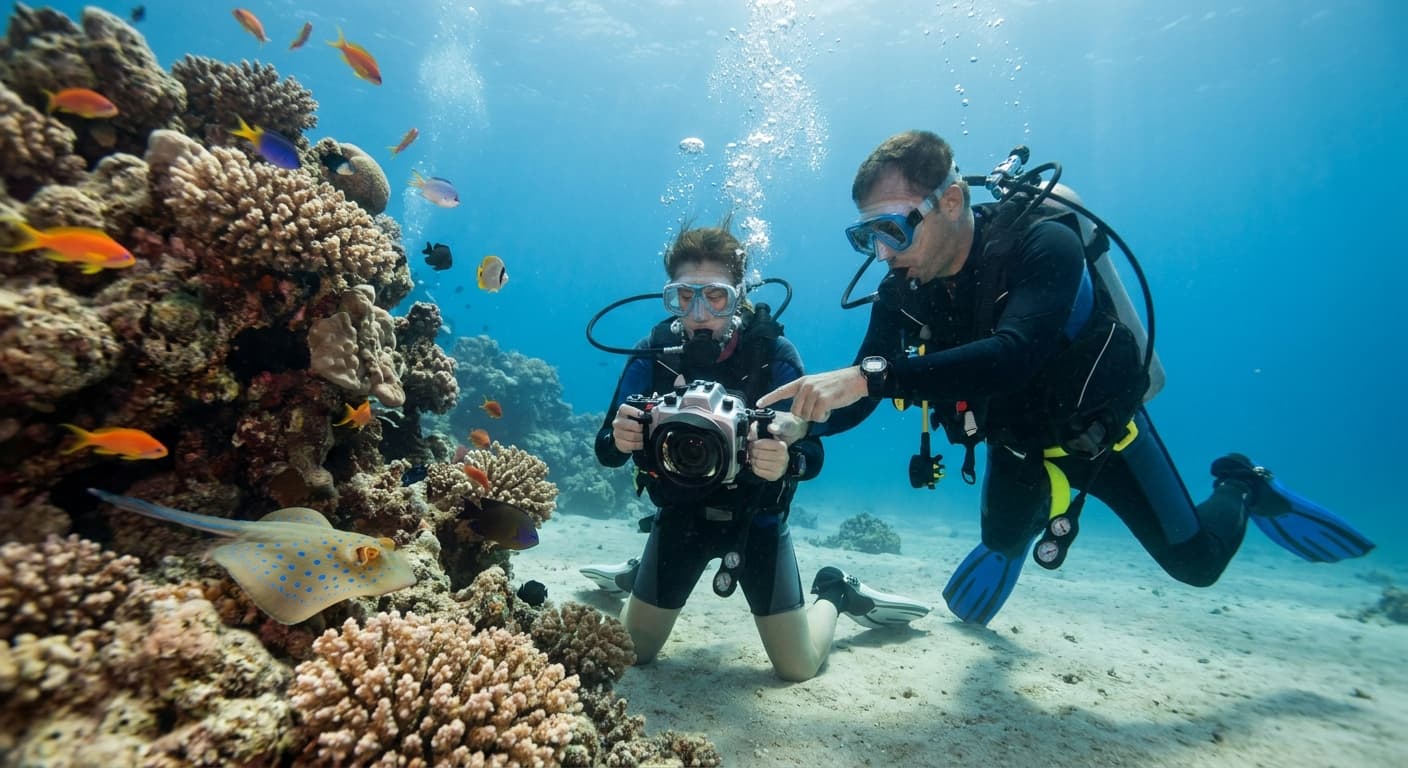
Certified divers who want sharper reef shots and cleaner wreck silhouettes need more than a GoPro strapped to a wrist mount — they need dive time built around light, buoyancy, and site selection.
Why this matters
Red light disappears from seawater by about 5 meters. Orange is gone by 10. By 15-18 meters, a scene that looks vivid to the naked eye reads flat blue-green on a sensor unless you're shooting with a strobe or shallow enough for ambient light to still carry color.
That's the entire argument for pairing photography training with the right dive, not just any dive. A photographer who books a 30-meter wreck dive before they can hold neutral buoyancy for five minutes straight will spend the whole dive fighting their fins instead of framing a shot. Hurghada's Red Sea sites reward divers who match the dive type to their skill level and their camera goals — reef color on shallow drift dives, wreck geometry on deeper technical sites, bioluminescence and macro detail on night dives.
Who this is for
This guide is for certified divers — Open Water and above — who already feel comfortable underwater and now want their photos to look like it. If you're not yet certified, PADI certification in Hurghada comes first; camera skills stack on top of dive skills, never the other way around. If you're a confident diver chasing wrecks, reef macro, or night shots specifically, keep reading.
Buoyancy control comes before camera control
A diver who can't hold still at 12 meters will scrape coral, silt up a wreck, or drift out of frame mid-shot. Any course worth booking in 2026 checks your trim and buoyancy on a warm-up dive before handing you a camera housing.