September 16, 2026
Snorkeling Trips for Marine Biology Researchers 2026
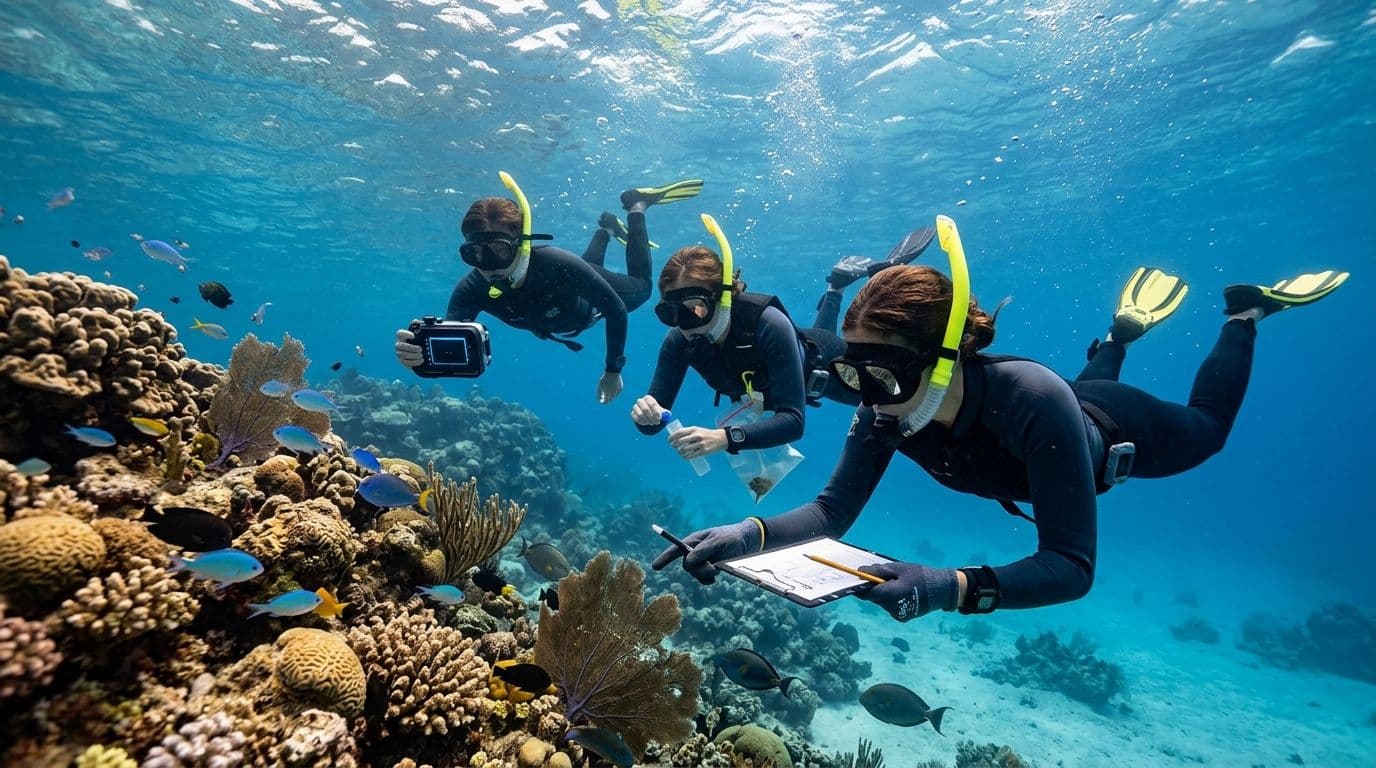
Snorkeling trips for marine biology researchers are structured Red Sea excursions built around species documentation, reef-zone comparison, and repeatable dive logistics rather than sightseeing. Researchers need consistent site access, predictable visibility windows, and boat crews who understand why you're circling the same coral head for forty minutes instead of moving on. TL;DR • Snorkeling trips for marine biology researchers need repeat-site access, not one-off reef tours — confirm exact reef names before booking. • Daily Red Sea runs coral reef conservation and small-group snorkeling trips out of Hurghada with fixed pickup times and no hidden fees. • Red Sea visibility on shallow fringing reefs is generally clearest October through May; plan 2026 fieldwork around that window. • Whale shark, manta ray, and macro-life excursions each route differently — match trip type to target species first. • Small private groups of 4-8 log more usable observation time than mixed tourist boats of 20+.
Why snorkeling trips matter for marine biology researchers
A tourist snorkeling trip optimizes for photo stops and variety. A researcher needs the boat anchored at the same coordinates on day one and day five, a crew that doesn't rush the group past a bleaching patch, and few enough people in the water to avoid kicking sediment across a transect line.
The difference shows up in itinerary structure, not marketing copy. If an operator can't name the reef zone you're visiting — not just "the coral garden" — the trip is built for volume, not observation. Daily Red Sea's coral reef conservation tour is one of the few Hurghada itineraries that names specific reef sites in advance rather than leaving the route to the day's wind.
2026 fieldwork planning also has to account for boat traffic. Hurghada's popular reefs carry heavy tourist snorkeling volume from November through March, so researchers working undisturbed transects often shift to early-morning departures or quieter sites toward Sahl Hasheesh and Marsa Alam.
Update your site selection criteria
Don't default to the most popular reef on an operator's list — popularity tracks tourist traffic, not research value.
• Confirm the exact reef name, not a generic label like "house reef"
• Ask whether the site sees daily boat rotation or is held for specific bookings
• Match depth range to your target species; fringing reef work differs from wall surveys
• Check the reef's current condition against recent storm or bleaching reports
• Cross-reference the season: October to May generally gives clearer water for photo documentation
Confirm crew briefing standards
A crew that gives a five-minute safety talk and pushes off isn't set up for research-paced snorkeling.
• Ask if the captain will hold position at one site for 30+ minutes on request
• Request a crew member who can flag hazards like fire coral without cutting the session short
• Confirm whether re-entry at the same site is allowed if surface conditions shift
• Check group caps — researchers do better on boats capped at 8-12 than on 20+ boats
Measure your visibility and logistics windows
Visibility varies by season, wind direction, and recent storms — none of which appear on a generic tour listing.
• Track wind forecasts for the week before departure; northerly wind stirs sediment on shallow reefs
• Ask the operator for their own visibility notes from the past two weeks, not a seasonal average
• Schedule multi-day work around calmer current windows
• Build in one buffer day per week; Red Sea boat trips do get cancelled for high wind
Document species targets before you book
Matching trip type to target species saves a wasted excursion.
• For megafauna, book dedicated whale shark snorkeling excursions rather than general reef trips
• For macro life and nudibranch documentation, prioritize sheltered bays over open drop-offs
• For manta ray behavior, ask specifically about cleaning-station locations
• For turtle resting and feeding sites, confirm current-season activity, not last year's
Standardize your equipment and safety protocol
Research snorkeling puts far more time in the water than a recreational trip, so gear reliability matters more.
• Bring your own mask and fins if fit consistency matters to your protocol; rental gear varies boat to boat
• Confirm the boat carries a first-aid kit and oxygen, standard on licensed Hurghada operators
• Ask whether wetsuits are available for sessions past 45 minutes
• Check for a stable ladder or platform, which matters more for repeated entries than for single-entry tourist trips
Negotiate group size and private booking terms
Mixed tourist boats dilute observation time. A private charter gives you control over pacing.
• Ask about private snorkeling tours for small groups if your team is under 8 people
• Negotiate a fixed single-site or two-site itinerary instead of a standard rotating route
• Confirm pickup and return times in writing; research days run longer than tourist half-days
• For week-long fieldwork, ask about repeat-booking terms at the same reef
Cross-check reef zone claims against published maps
Operators sometimes rebrand a site to sound more exclusive than it is. Verify before scheduling around it.
• Compare the operator's site name against published Red Sea reef maps
• Ask local dive shops whether the name matches what they use
• Check the reef against a visibility reference like the Red Sea reefs ranked by visibility guide before locking a multi-day plan
A snorkeling trip built for marine biology fieldwork stands or falls on site consistency — if the boat can't return to the same reef twice, the observations aren't comparable.
Comparing snorkeling trip formats for researchers
| Option | Best for | Key limitation |
|---|---|---|
| Standard tourist reef trip | First-visit species familiarization | Short stops, site rotation not guaranteed |
| Private small-group charter | Multi-day repeat-site fieldwork | Needs advance negotiation on route and timing |
| Coral reef conservation tour | Reef health documentation | Fixed itinerary may miss your species target |
| Whale shark or manta excursion | Seasonal megafauna observation | Sightings are never guaranteed |
| Night snorkeling trip | Nocturnal species and behavior | Lower visibility, needs an experienced crew |
Plan a research-paced snorkeling trip
Named reef sites, confirmed pickup, small-group booking out of Hurghada.
See trip options
Common mistakes marine biology researchers make when booking
• Booking a generic multi-stop tour instead of a fixed-site itinerary. Multi-stop trips sell variety, not the hold time observation work needs.
• Skipping the pre-trip visibility check. A 2026 seasonal average says nothing about what the water looked like after last week's wind.
• Assuming every Hurghada boat allows re-entry at the same site. Some run one anchor point per stop with no return once the group moves on.
• Underestimating group-size dilution. Twenty tourists kicking near a transect change sediment conditions faster than four careful researchers.
• Not confirming crew familiarity with the target species. A crew never asked about nudibranch density or turtle feeding zones won't know where to anchor.
One last thing
Operators often describe a reef as "protected" without saying from what. Storm damage, anchor damage, and overtourism are three different problems with three different site-selection consequences — ask which one applies before building a week of 2026 fieldwork around a single reef.
Related guides
• Red Sea macro life diving trip for underwater photographers
• School group educational tours in Hurghada
Frequently asked questions
What's the best snorkeling trip in Hurghada for marine biology fieldwork?
A private small-group charter at a fixed, named reef site works best, because it allows repeat visits to the same location. Daily Red Sea's private snorkeling tours and coral reef conservation tour both support fixed-itinerary booking in 2026.
Is a coral reef conservation tour better than a standard snorkeling trip for research?
Yes for reef health documentation, since conservation tours name exact sites and move at a slower pace. Standard reef tours suit species familiarization more than structured data collection.
When is Red Sea visibility best for underwater documentation?
Visibility is generally clearest from October through May around Hurghada, with wind in other months stirring sediment on shallow fringing reefs. Confirm recent conditions with the operator rather than relying on the seasonal average.
Can researchers request extended time at a single reef site?
Most private charters will hold position longer than a standard tourist stop if you request it when booking. Mixed-group boats are less flexible because they run fixed multi-stop routes.
Do whale shark or manta ray trips guarantee a sighting?
No, sightings depend on season and conditions even on a dedicated excursion. Booking inside known seasonal windows improves the odds without guaranteeing an encounter.
What group size works best for research-paced snorkeling?
Groups of four to eight disturb less sediment and get more usable observation time than boats carrying twenty or more. Ask about private or small-group charters if your team fits that range.
Should researchers bring their own snorkeling gear?
Bring your own mask and fins if fit consistency matters to your protocol, since rental quality varies boat to boat. Licensed Hurghada operators carry standard rental equipment as a backup.
How far ahead should a research group book a Red Sea snorkeling trip?
Book several weeks ahead for multi-day fieldwork, especially in the November to March high season when reef traffic peaks. Early booking also leaves room to negotiate a fixed itinerary instead of a rotating route.