September 21, 2026
Red Sea marine life sightings by season 2026
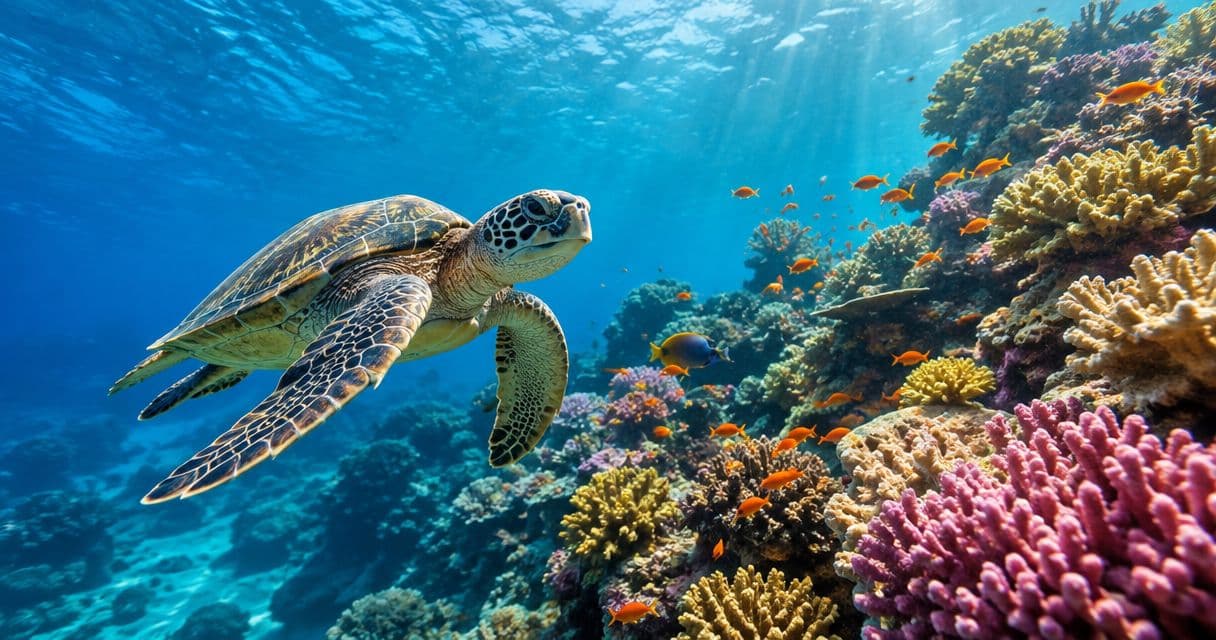
The best time to see marine life in the Red Sea is September through February, when visibility runs 20-30 meters and cooler water clears out the summer plankton bloom — but if whale sharks or manta rays are the goal, spring and autumn are the sharper bet. This season-by-season breakdown for 2026 covers water temperature, visibility, and which species show up when along the Hurghada-to-Marsa Alam coast. TL;DR • Autumn (Sep-Nov) and winter (Dec-Feb) give the clearest Red Sea water in 2026, typically 20-30m visibility. • Whale sharks cluster in the shoulder months of spring (Apr-Jun) and autumn (Sep-Nov) near Marsa Alam and Ras Mohammed. • Manta rays show up most reliably Sept-Nov off Marsa Alam, especially around Abu Dabbab and Elphinstone. • Turtles and reef fish are visible year-round, so any 2026 date works if wildlife-specific timing isn't the priority. • Summer (Jun-Aug) trades visibility (10-20m) for the warmest water of the year at 27-30°C.
Why this matters
Booking a Red Sea trip in the wrong month is the single biggest reason snorkelers come back with "the water was cloudy" or "we never saw the whale shark" complaints. Water temperature, plankton levels, and animal migration timing all shift month to month along the Hurghada-to-Marsa Alam coast.
The gap between a sharp 30-meter reef view and a hazy 10-meter one is seasonal, not luck. A 2026 booking that ignores season data is gambling with the one thing the trip is actually for: seeing the reef and what lives in it.
Water temperature and visibility by season in 2026
Water temperature and horizontal visibility move in opposite directions through the year on the Egyptian Red Sea. Visibility runs clearest when the water is coolest, because cooler months carry less of the plankton bloom that clouds the reef in summer.
| Season (2026 months) | Water temperature | Typical visibility | Overall rating |
|---|---|---|---|
| Winter (Dec-Feb) | 21-24°C / 70-75°F | 20-30m | High |
| Spring (Mar-May) | 24-27°C / 75-81°F | 15-25m | Moderate-high |
| Summer (Jun-Aug) | 27-30°C / 81-86°F | 10-20m | Moderate |
| Autumn (Sep-Nov) | 26-28°C / 79-82°F | 20-30m | High |
| All-season average | 24-27°C / 75-81°F | 18-24m | Baseline |
Autumn and winter lead this table on clarity at 20-30m; summer trails at 10-20m. The same plankton bloom that clouds the water in July and August is what pulls whale sharks in to feed, so the worst visibility month often overlaps with the best wildlife month.
These ranges reflect seasonal patterns commonly cited across the Hurghada-to-Marsa Alam stretch of the Egyptian Red Sea, based on year-round dive and snorkel operator observation rather than a single lab reading. One limitation worth naming here: visibility swings with wind and current on any single day, so a "high" month can still hand you a rough morning, and a "moderate" summer week can still deliver a glass-calm dive.
Marine life sightings by season in 2026
Species timing is a separate variable from visibility. Some Red Sea animals show up on a predictable seasonal window; others are visible year-round regardless of month.
| Species | Peak window | Where it clusters | Off-peak reliability |
|---|---|---|---|
| Whale shark | Apr-Jun and Sep-Nov | Marsa Alam reefs, Ras Mohammed | Occasional, not guaranteed |
| Manta ray | Sep-Nov | Marsa Alam (Abu Dabbab, Elphinstone) | Rare outside this window |
| Spinner dolphin | Year-round, best at sunrise | Sha'ab Samadai (Dolphin House) | Reliable most mornings |
| Green and hawksbill turtle | Year-round | Abu Dabbab, Marsa Alam seagrass beds | Most reliable sighting on this table |
| Dugong | Year-round, rare | Abu Dabbab | Low encounter rate any month |
Turtles lead this table on reliability — they sit in the seagrass beds around Abu Dabbab in essentially every month of the year. The dugong trails as the hardest animal on the coast to schedule around, appearing in low numbers regardless of season.
If a whale shark snorkeling excursion is the point of the trip, treat the Apr-Jun and Sep-Nov windows as your target, and book a manta ray spotting boat trip for the Sept-Nov stretch specifically — mantas off Marsa Alam don't show the same reliability outside that window.
Snorkeler near a whale shark in clear Red Sea water
Whale shark encounters cluster in the shoulder months, not the calendar-clear months.
How to use these benchmarks
• Priority is whale sharks: book the Apr-Jun or Sep-Nov window and treat any sighting as a bonus, not a guarantee — no operator can schedule wildlife.
• Priority is visibility for photos or video: book Sept-Feb, and check the Red Sea reefs ranked by visibility breakdown before picking a specific reef.
• Priority is turtles: month barely matters — Abu Dabbab and the Marsa Alam seagrass beds hold turtles across the 2026 calendar.
• Traveling in summer for other reasons: don't skip snorkeling. Visibility drops to 10-20m, but the water sits at its warmest of the year and whale shark feeding activity peaks in the same stretch.
Match your dates to the season
Book a snorkeling trip timed to the visibility and species window that matters to you.
Browse snorkeling trips
One last thing
Sunrise is the one variable in this guide that isn't seasonal: dolphin and turtle sightings both improve in the first two hours after sunrise regardless of month, because boat traffic and wind are at their lowest then. If your 2026 dates fall in a "moderate" visibility month, booking the earliest departure slot available does more for your odds than shifting the trip by a few weeks.
Related guides
• Dolphin House snorkeling trip for wildlife lovers
• Turtle Bay snorkeling trip for wildlife lovers
Frequently asked questions
What is the best time to see marine life in the Red Sea?
September through February gives the clearest water, at roughly 20-30m visibility, while April-June and September-November are the strongest windows for whale sharks specifically. Turtles and reef fish are visible year-round in 2026.
When is whale shark season in the Red Sea?
Whale sharks cluster in two shoulder-season windows: April-June and September-November, mostly near Marsa Alam reefs and Ras Mohammed. Sightings are seasonal, not guaranteed on any given day.
When do manta rays show up near Marsa Alam?
Manta rays are most reliable September-November around Abu Dabbab and Elphinstone. Outside that window, manta sightings drop off sharply.
Is Red Sea visibility better in summer or winter?
Winter and autumn beat summer on visibility, running 20-30m against summer's 10-20m. Summer's plankton bloom clouds the water but also draws in feeding whale sharks.
Can you see dolphins in the Red Sea year-round?
Yes. Spinner dolphins at Sha'ab Samadai (Dolphin House) are visible most mornings across the calendar, with sunrise trips giving the calmest water and best odds.
Do turtles disappear at certain times of year?
No. Green and hawksbill turtles hold in the seagrass beds around Abu Dabbab and Marsa Alam year-round, making them the most reliable sighting on this list regardless of month.
What water temperature should I expect snorkeling in the Red Sea in 2026?
Expect 21-24°C in winter (Dec-Feb), climbing to 27-30°C in summer (Jun-Aug). Spring and autumn sit in between at 24-28°C.
Are dugongs common in the Red Sea?
No. Dugongs, mostly reported around Abu Dabbab, have a low encounter rate in any month and are the hardest animal on this list to plan a trip around.