September 2, 2026
Red Sea Macro Diving Trip for Photographers (2026 Guide)
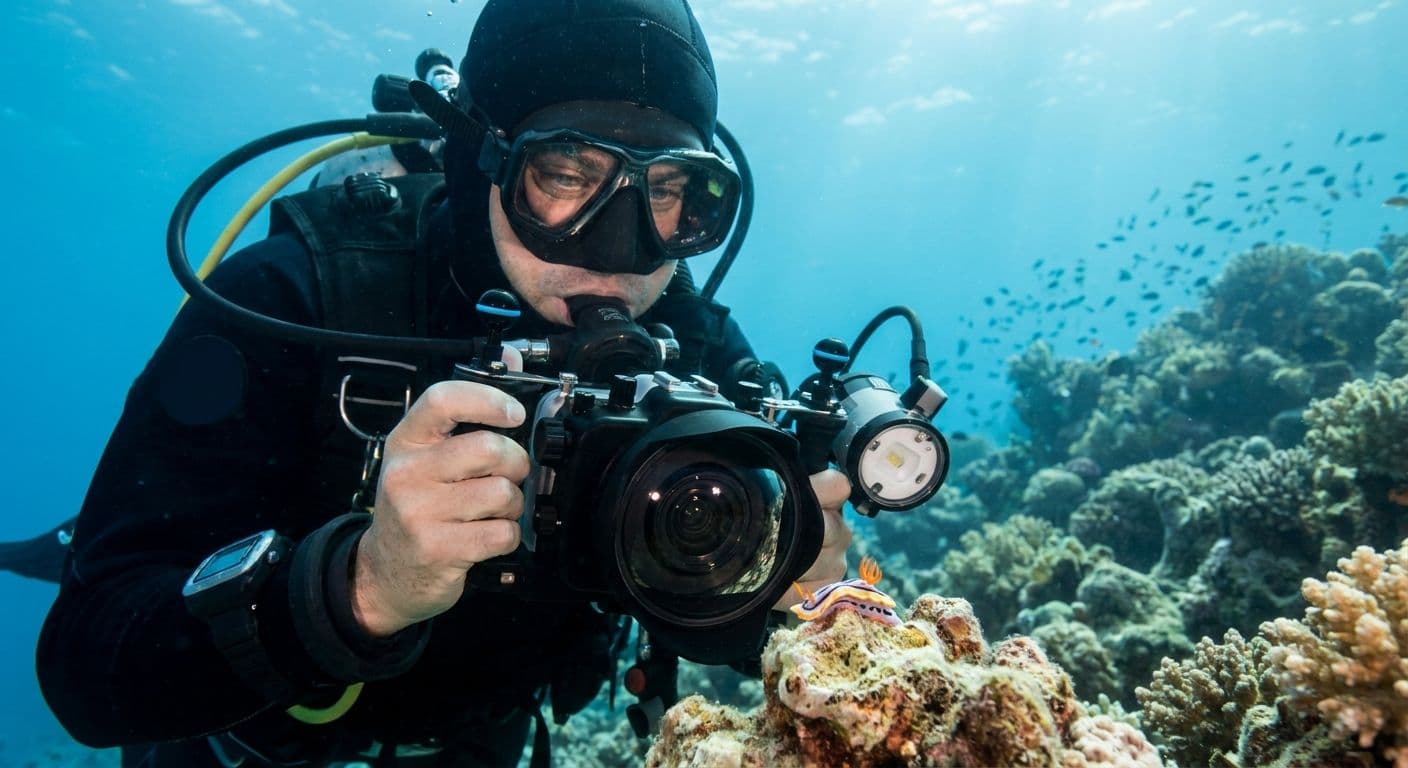
A Red Sea macro diving trip built for underwater photographers means picking calm, subject-rich reef sites over drift routes, and shaping the dive plan around light, buoyancy and patience instead of maximum bottom time. Macro shooters need slow, current-sheltered walls where a single coral head can hold twenty minutes of material, not a fast-moving reef tour where the group swims past a nudibranch in five seconds. TL;DR • Panorama Reef and sheltered Hurghada bays hold resident nudibranchs, ghost pipefish and mantis shrimp year-round — a red sea macro diving trip photographers can shoot slowly on these sites. • Small-group boats beat big day-tripper boats for macro work because you control time per subject, not the group's fastest fin-kicker. • An underwater photography course before the trip fixes the buoyancy and trim errors that ruin macro shots more than any camera housing does. • Night dives in 2026 add mantis shrimp, basket stars and bioluminescent plankton that daytime macro misses entirely. • Wreck hulls near Hurghada carry as much macro life as open reef — frogfish and nudibranchs colonize encrusted metal fast.
Why macro diving trips matter for underwater photographers
Macro shooters search differently than sightseeing divers. They look up named sites — Panorama Reef, Shaab Abu Nuhas, Careless Reef — because subject density and shelter from current matter more than the reef's overall size. A drift dive that thrills a recreational diver can ruin a macro session: current keeps pushing you off the subject before the strobe fires.
The constraint underwater photographers actually face is dive time per subject, not total dive count. A 45-minute reef dive spent entirely on one bommie beats three shallow reef stops in one day. That changes what to book: fewer sites, longer stays, guides briefed on exactly what you're hunting.
A Red Sea macro trip built around photography works when the boat, the guide, and the site all get chosen for stillness, not distance covered.
Scout macro-friendly reef sites before booking
Start with sites known for shelter and subject density rather than scenery. Hurghada's bay reefs and the Panorama Reef diving trip sit close enough to shore that current is manageable most of the year, which matters more to a macro shooter than a dramatic drop-off.
• Ask specifically about nudibranch, ghost pipefish, and mantis shrimp sightings at each site, not just "good visibility"
• Check whether the site is sheltered bay or open channel — channels run current that ruins stationary macro shots
• Cross-reference sunrise and afternoon slots; low-angle light changes what's active on the reef
• Note whether the site allows repeat visits in one trip so you can return to a subject you missed the shot on
• Favor sites divers describe as "muck" or "rubble" bottoms — these hold more cryptic macro life than pristine hard coral
Confirm boat and group size limits
A 20-diver day boat splits guide attention across the whole group, and macro shooters lose time waiting for the group to move on. Ask about group size before booking, not after.
• Request small-group or private boat options where the guide briefs on macro subjects specifically
• Confirm the boat allows extended bottom time at one site instead of a fixed multi-stop itinerary
• Check if the crew tolerates buddy pairs splitting off to work a subject alone
• Ask whether the schedule includes a surface interval long enough to review shots and swap lenses
• Look for boats that specialize in wreck sites near Hurghada — wreck superstructure holds dense macro colonies and crews there are used to slower-paced diving
Brief your guide on target subjects
A generic dive briefing covers depth and exit points. A macro-specific briefing tells the guide what you're actually hunting, and a guide who dives that reef weekly usually knows exactly where last week's frogfish was sitting.
• Show reference photos of target species before the dive — pygmy seahorse, harlequin shrimp, blue-ringed octopus
• Ask the guide to point rather than touch, and agree on a hand signal for "found it, take your time"
• Confirm the guide will hover near a find rather than moving the group forward automatically
• Request a second pass on any subject you couldn't get a clean angle on the first time
• If your kit includes a strobe or focus light, tell the guide in advance so they don't shine a torch straight into your frame
Dial in weighting and trim for macro work
Macro shooting means holding still centimeters from the reef for minutes at a time. Bad trim sends fins into coral and stirs silt that ruins the shot for everyone behind you.
• Add or remove weight until you can hover motionless with an empty BCD at 5 meters
• Practice frog-kick and back-kick finning so your fin wash never points at the substrate
• Use a muck stick or pointer to steady your position instead of grabbing the reef
• Check trim horizontally, not just buoyancy — a head-down angle pushes silt straight into your own shot
• Book a session through an underwater photography course if your buoyancy isn't dialed in yet — this is the fastest fix for photographers whose shots come back blurry or backscattered
Plan your light and lens kit for Red Sea visibility
Red Sea macro life is small and often tucked in shadow, so lighting choices matter more than lens choice once you're past a basic macro or wet-diopter setup.
• Bring at least one focus light so the autofocus locks onto cryptic subjects in low light
• Pack a diffuser for your strobe — direct flash on reflective nudibranch skin blows out color
• Carry a backup battery or spare strobe; Red Sea boat trips rarely have a dive shop nearby to fix gear mid-trip
• Shoot wide-open apertures for subject isolation against rubble or sand backgrounds
• Test white balance settings topside before the dive to save editing time later
Book a dedicated photography-friendly dive schedule
Schedule around light and subject behavior instead of a fixed day-boat departure time. Many nocturnal macro subjects — mantis shrimp, basket stars, bioluminescent plankton — only come out after sunset.
• Pair a daytime reef dive with one of the night diving trips for a completely different macro subject list
• Ask whether the operator offers back-to-back same-site dives, useful when a subject was found late in the first dive
• Build in a rest day between long macro sessions — task-loading with camera gear adds fatigue faster than a normal reef dive
• Confirm surface interval length matches your need to change lenses or dump a memory card
• Check the how to prepare for scuba diving in Hurghada guide before your first day if this is your first Red Sea trip — logistics differ from other dive destinations
Log and back up images between dives
A lost memory card or corrupted file after a week of macro shooting is the most avoidable failure on a photography trip.
• Back up to two separate drives after every dive day, not just once at the end of the trip
• Log site name, depth, and subject species per shot while the dive is still fresh
• Rinse and dry camera housings fully before opening them — salt residue in an O-ring seal is the top cause of flooded housings
• Keep a spare O-ring kit and silicone grease in your dive bag
Comparison: dive formats for macro photographers
| Option | Best for | Key limitation |
|---|---|---|
| Guided day boat, small group | Photographers wanting flexible single-day sites | Fixed departure time limits how long you stay per subject |
| Underwater photography course | Divers with weak buoyancy or trim ruining shots | Adds a day to the trip before serious shooting begins |
| Night diving trip | Shooters chasing mantis shrimp, basket stars, nocturnal subjects | Requires prior night-dive comfort and a focus light |
| Wreck-focused trip | Photographers targeting encrusted-hull macro colonies | Current at open wreck sites can be stronger than sheltered bay reefs |
Verdict: pair one small-group reef day with one night dive — that combination covers the widest macro subject list in a single Red Sea trip in 2026.
Plan your macro dive days
Small-group boats, guide briefings on target species, clear pickup times.
Browse dive trips
Common mistakes underwater photographers make on Red Sea trips
• Overweighting for stability: extra lead makes hovering harder, not easier, and drives fin contact with the reef
• Booking big day-tripper boats: group pacing forces you off a subject before you've got the shot
• Skipping the guide briefing: a guide who doesn't know your target species points out the wrong things all dive
• Chasing too many sites in one day: three shallow stops produce fewer usable frames than one long stay at one site
• Ignoring backscatter from direct strobe angles: this is the single most common ruined-shot cause in Red Sea macro images
One last thing
The subject you're missing is usually not the rare one. Photographers hunting pygmy seahorses often walk past three ghost pipefish and a mantis shrimp burrow because they're only briefed on one target species — brief your guide on a short list, not one animal, and your frame count triples.
Related guides
• Best liveaboard diving trips from Hurghada
• Freediving courses for breath-hold enthusiasts
• Advanced open water diver course in Hurghada
• Careless Reef snorkeling and diving day trip from Hurghada
Frequently asked questions
What's the best Red Sea macro diving trip for photographers in 2026?
A small-group day boat to a sheltered bay reef like Panorama Reef, paired with one night dive, covers the widest macro subject list. Avoid large day-tripper boats since group pacing cuts your time per subject.
Is a Red Sea macro diving trip better than a wide-angle reef trip?
It depends on the subject list you're after. Macro trips favor sheltered, current-free sites with rubble or muck bottoms, while wide-angle trips favor open reef with better overall visibility.
Do I need an underwater photography course before a macro trip?
Not required, but a course fixes buoyancy and trim issues that cause more ruined macro shots than gear does. It's worth booking if your last dive photos came back blurry or full of backscatter.
What macro subjects can you find near Hurghada?
Nudibranchs, ghost pipefish, mantis shrimp, frogfish and pygmy seahorses show up on sheltered reef and wreck sites near Hurghada. Night dives add nocturnal species like basket stars and bioluminescent plankton.
Is night diving worth it for macro photography?
Yes — mantis shrimp and other nocturnal macro subjects rarely appear on daytime dives. A dedicated night diving trip covers a completely different subject list than a daytime reef dive.
How long should a macro dive last for photographers?
Plan for longer stays at fewer sites rather than a multi-stop itinerary. A 45-minute dive spent on one bommie usually produces more usable frames than three shorter stops.
Are wrecks good for macro photography?
Yes — encrusted wreck hulls near Hurghada often hold dense frogfish and nudibranch populations. Current can run stronger at open wreck sites than sheltered bay reefs, so check conditions first.
What gear do I need for a Red Sea macro trip?
A macro lens or wet diopter, a focus light for autofocus in low light, a diffused strobe, and a backup battery or spare strobe cover most Red Sea conditions. Test white balance topside before the first dive.