September 6, 2026
Red Sea Egypt Snorkeling for First-Timers 2026: What to Book
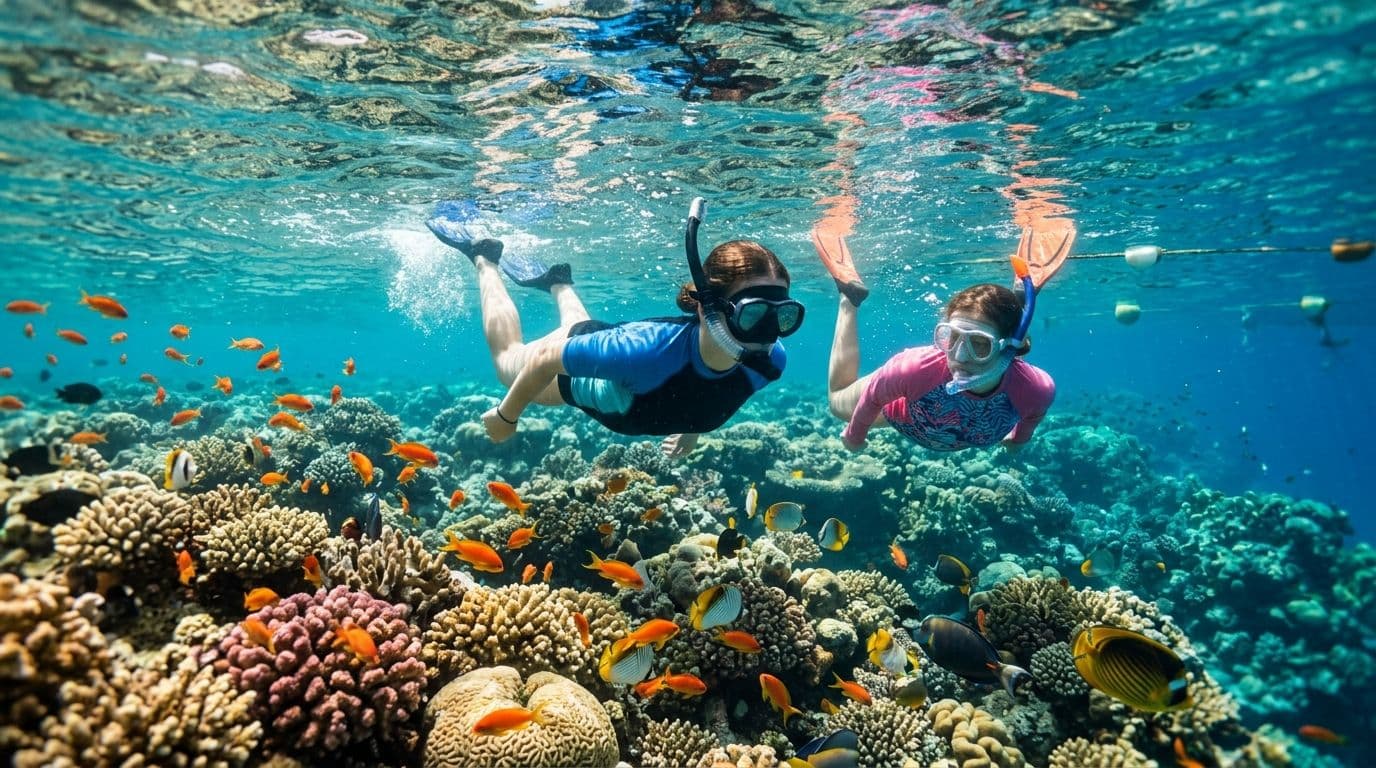
First-time visitors to Red Sea Egypt snorkeling get calm, warm water and shallow reef entries that need no certification, no swimming badge, and no prior snorkel experience — just a mask, a snorkel, and a willingness to float face-down for twenty minutes. What trips up newcomers isn't the reef itself; it's picking the wrong boat, the wrong reef depth, or skipping seasickness prep before the ride out. TL;DR • Red Sea Egypt snorkeling works best for first-timers on a guided half-day or full-day boat trip, not a solo shore entry. • Daily Red Sea's best snorkeling trips in Hurghada for first-time visitors match reef stops to skill level, including shallow sites for non-swimmers. • Take motion-sickness tablets 30-60 minutes before boarding — seasickness ends more first trips than marine life ever does. • Red Sea visibility commonly runs 15-30 meters on calm days, which is why beginner reefs still feel dramatic. • Skip full-face masks on trip one; a traditional mask and snorkel is easier to clear and less prone to fogging.
Why Red Sea Egypt snorkeling matters for first-timers
A first snorkel trip either hooks someone for life or puts them off the water entirely, and the difference usually comes down to logistics nobody warns them about. Beginners searching Red Sea Egypt snorkeling tend to book whichever boat trip appears first, without checking whether that trip's reef sites suit a non-swimmer or someone who's never wet a mask.
The reef itself rarely disappoints in 2026 — clear water and reliable weather windows make the Red Sea one of the more forgiving places to try snorkeling for the first time. What separates a great first trip from a rough one is preparation: gear fit, seasickness management, and picking a boat that stops at beginner-depth reef instead of racing straight to advanced sites.
Pick your reef based on skill level, not the prettiest photo
Not every Red Sea reef suits a first-timer. Some sites drop into deeper channels close to the boat; others sit in shallow, current-free lagoons built for people finding their fins for the first time.
• Choose reef sites with a shallow shelf near the boat ladder, not a straight drop-off
• Ask whether the trip includes a life vest for non-swimmers before booking
• Confirm the boat makes at least two reef stops so a rough first entry doesn't ruin the whole day
• Check that the crew briefs entry and exit points before anyone jumps in
• Avoid combining your first snorkel with a wreck or drift site — save those for trip two
Daily Red Sea's best snorkeling trips in Hurghada for first-time visitors builds the day around beginner-depth stops instead of the sites experienced divers chase.
Time your trip around water and weather conditions
Wind chop turns a calm reef into a rough one fast, and a choppy surface makes mask-clearing and breathing through a snorkel harder for someone who's never done it.
• Morning departures usually mean calmer water before afternoon wind picks up
• Check the forecast the night before — a red flag day on shore usually means a red flag day at the reef too
• Avoid the middle of a strong wind season if this is genuinely your first time in a mask
• Ask the operator directly if a trip has been rescheduled for weather that week
Rent or bring the right gear
Gear that doesn't fit ruins more first snorkels than any reef condition does. A leaking mask means a panicked swimmer, not a relaxed one.
• Test mask fit on land first: press it to your face without the strap and inhale — it should suction and hold
• Bring your own snorkel if you're prone to gagging on unfamiliar mouthpieces
• Skip full-face masks for your first outing; standard masks are easier to clear if water gets in
• Wear reef-safe, mineral-based sunscreen (SPF 30 or higher) — some reef zones restrict oxybenzone-based products
• Rent fins one size up if you're wearing them over water socks
Prep your body before you get in the water
Most first-timer panic moments trace back to something avoidable: seasickness, dehydration, or an empty stomach making someone dizzy in open water.
• Take motion-sickness tablets 30-60 minutes before boarding, not after you already feel queasy
• Eat a light meal, not a heavy one, at least an hour before the boat leaves
• Stay hydrated — sun and salt water both pull moisture out faster than you'd expect
• Sit toward the boat's middle or rear, where motion is less pronounced, if you're worried about seasickness
For a longer breakdown of anti-seasickness tactics specific to Hurghada boat trips, how to avoid seasickness on Hurghada boat trips covers positioning, timing, and what to eat before boarding.
Learn basic snorkel etiquette and safety before you jump in
A five-minute briefing from the crew covers most of what a first-timer needs, but knowing the basics before boarding makes that briefing click faster.
• Breathe slowly and evenly through the snorkel — panicked, shallow breathing is what triggers most first-timer anxiety
• Never touch coral, even to steady yourself; it damages the reef and can cut skin
• Stay within sight of the guide or the boat's marker buoy
• Signal distress with a raised, waving arm rather than shouting through a mouthpiece
Book a guided boat trip instead of a solo shore entry
Shore snorkeling looks easier on paper — no boat, no schedule — but it skips the safety net a guided trip provides: a crew watching the water, a life vest on hand, and reef stops picked for your comfort level rather than whatever's closest to the beach.
Non-swimmers specifically should look for a trip built around that constraint rather than hoping a standard group tour accommodates them. Snorkeling trips for non-swimmers in Hurghada sticks to shallow, current-free sites with life vests provided.
Book your first Red Sea snorkel trip
Beginner-depth reef stops, life vests included, clear pickup times.
Set sail
First-timer snorkeling options compared
| Option | Best for | Key limitation |
|---|---|---|
| Shore snorkeling (public beach) | Budget-conscious solo travelers | No crew supervision, limited shallow reef access |
| Guided group boat trip | Most first-timers, including non-swimmers | Fixed morning departure, shared schedule |
| Private snorkeling tour | Small groups wanting a custom pace | Fewer reef stops per day than a full group boat |
| Liveaboard snorkeling | Travelers combining multiple reef days | Cabin life doesn't suit anyone still prone to seasickness |
Verdict: a guided group boat trip wins for most first-time visitors — it pairs crew supervision with reef selection built for beginners, without the cost of a private charter.
Common mistakes first-time snorkelers make
• Skipping seasickness prep entirely — then spending half the trip below deck instead of in the water.
• Buying a full-face mask as a "safer" option — they're harder to clear and trap more exhaled air than a traditional mask and snorkel.
• Not testing mask fit before boarding — a leaking mask on day one is the single fastest way to panic in open water.
• Eating a heavy breakfast right before departure — a full stomach plus boat motion is a common combination for nausea.
• Wearing standard sunscreen instead of reef-safe SPF — some reef zones flag oxybenzone-based products, and crews will call it out.
One last thing
Most first-timers over-prepare for marine life and under-prepare for the boat ride — seasickness, not sharks or currents, is what actually derails a first Red Sea snorkeling trip in 2026. Sort the motion-sickness tablets and mask fit before you worry about anything in the water.
Related guides
• Best Red Sea Egypt tours for first-time visitors
• Ras Mohammed National Park snorkeling trip from Hurghada
Frequently asked questions
What's the best snorkeling spot in Hurghada for beginners?
Shallow, current-free reef shelves near the boat's anchor point work best for first-timers in 2026. Sites like Giftun Island and Mahmya offer calm entry points and short swims back to the boat.
Do I need to know how to swim to snorkel in the Red Sea?
No — a life vest and a guided trip built for non-swimmers cover most first-timer concerns. Dedicated non-swimmer snorkeling trips stick to shallow water where standing is possible in most spots.
Is Red Sea Egypt snorkeling safe for first-timers?
Yes, with a guided boat trip that briefs entry points and keeps a crew member watching the water. The main risks for beginners are seasickness and gear panic, not the reef itself.
How do I avoid getting seasick on a snorkeling boat trip?
Take motion-sickness medication 30-60 minutes before boarding and sit toward the boat's middle. Eating a light meal beforehand, rather than skipping food or overeating, also helps.
What's the best time of year for Red Sea snorkeling?
Calmer wind windows generally fall in the shoulder months, though conditions vary by week in 2026. Morning departures tend to hit calmer water regardless of season.
Should I book a shared boat trip or a private snorkeling tour?
A shared group boat trip suits most first-timers because it's built around beginner-depth reef stops at a lower cost. A private tour makes sense for small groups wanting a custom pace or extra reef time.
What should I bring on my first Red Sea snorkeling trip?
Reef-safe SPF 30+ sunscreen, a rash guard, water shoes, and motion-sickness tablets cover the essentials. Bring your own snorkel mouthpiece if you're picky about fit.
How much snorkeling experience do I need before visiting Ras Mohammed?
Ras Mohammed suits snorkelers with at least one or two easier trips under their belt, since currents run stronger there than at beginner lagoons. First-timers generally do better starting at a calmer site closer to Hurghada.