August 29, 2026
Liveaboard Trip for Snorkelers in Hurghada: 2026 Guide
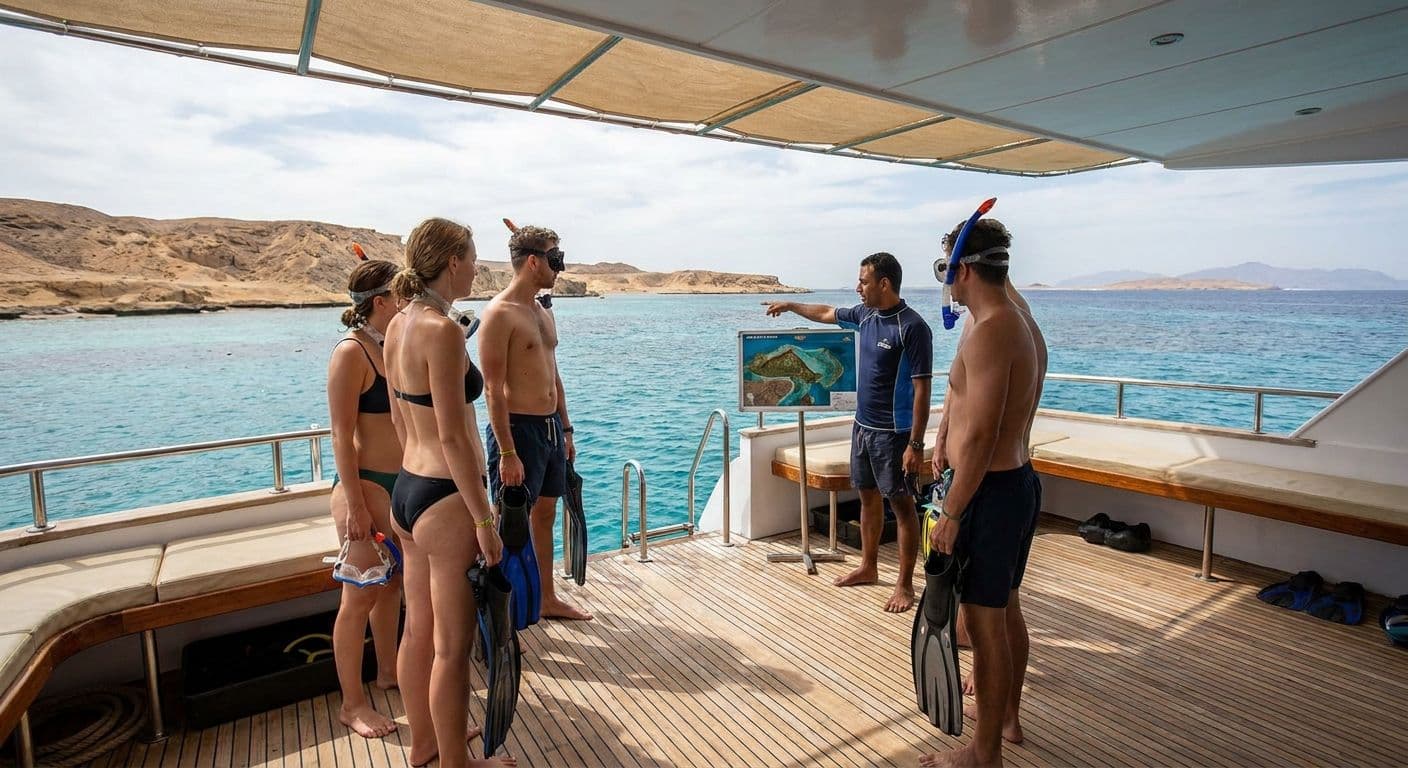
Choose a liveaboard trip for snorkelers by matching the itinerary type to your comfort level, not the dive count on the brochure: a mixed dive-and-snorkel boat with a dedicated snorkel guide, a 3 to 7 night itinerary, and daily reef-top sessions is the safest liveaboard trip for non-certified snorkelers in 2026. The hidden catch most people miss is that many Red Sea liveaboards are built for certified divers first, which means snorkelers get leftover time slots and shallower, less interesting sites unless the boat explicitly markets a snorkel program. TL;DR • A mixed dive-snorkel liveaboard beats a dive-only boat for non-certified snorkelers in 2026 - ask about the guide ratio before booking. • 3 to 7 night itineraries are standard for Red Sea liveaboards; shorter trips mean fewer reef stops per day. • Snuba and guided reef-top snorkeling are the two realistic in-water options without a PADI card. • Seasickness, not the reef, is the top reason non-divers cut a liveaboard trip short - pick a boat with a stabilized hull and check the route. • Daily Red Sea runs day-boat and liveaboard-style snorkeling trips out of Hurghada for travelers without a certification.
Why this matters
Most liveaboard marketing talks to certified divers because that's who fills the cabins. Non-certified snorkelers booking the same boat can end up stuck on deck while the dive group is 18 meters down, or worse, put on a site chosen for wall diving instead of shallow coral.
Getting this right before you pay a deposit saves a wasted trip. A liveaboard trip from Hurghada built around mixed groups will list snorkel stops on the itinerary sheet, not just dive sites - if that detail is missing, ask before booking.
How to choose a liveaboard trip for non-certified snorkelers
The question isn't "which boat is nicest" - it's "which boat treats snorkelers as a planned group, not an afterthought." Three checks separate a good fit from a wasted booking:
Ask for the snorkel-to-dive ratio. A boat running 4 dives a day for certified guests and one 20-minute snorkel window for everyone else is not built for you.
Confirm a dedicated snorkel guide. Divers get a dive guide; snorkelers need someone in the water with them too, not just a crew member watching from the boat.
Check the itinerary length against your stamina. Red Sea liveaboards typically run 3 to 7 night routes - a 3-night trip suits first-timers, a 7-night trip suits people who want to island-hop through multiple reef systems.
| Boat type | Snorkeler fit | Typical guide setup | Verdict |
|---|---|---|---|
| Dive-only liveaboard | Poor - built around tank fills and deep sites | 1 dive guide per group, no snorkel lead | Skip if you're not certified |
| Mixed dive-snorkel liveaboard | Strong - snorkel stops scheduled alongside dives | Separate snorkel guide, shallower sites chosen | Best pick for non-certified travelers |
| Day-boat with multiple island stops | Good for shorter trips, no overnight cabin | Crew supervises snorkel zones directly | Solid alternative if multi-night isn't needed |
| Private charter | Flexible - itinerary built around your group | Guide ratio negotiable | Best for small groups wanting full control |
The mixed dive-snorkel liveaboard wins for most non-certified travelers heading into the 2026 season because it keeps the reef-top sites in the plan instead of treating snorkeling as a consolation activity.
If a liveaboard still feels like too much boat
Some travelers want the reef access without a multi-night commitment. A day-boat itinerary or a snuba diving trip for non-certified travelers gets you closer to the reef than snorkeling alone, using a surface-supplied air line instead of a scuba tank, without requiring any certification. It's a reasonable middle step before committing to a full liveaboard booking.
Why liveaboard fit varies so much between boats
No two Red Sea liveaboards run the same way, and the differences come down to a short list of operational choices:
• Itinerary length - 3-night routes hit fewer sites but ask less of first-time snorkelers; 7-night routes cover more reef systems but demand more stamina.
• Group composition - a boat booked mostly by certified divers will schedule around dive times first.
• Guide-to-guest ratio - more guides in the water means closer supervision for weaker swimmers.
• Boat stability - larger, stabilized hulls handle open-water crossings with less rocking, which matters more than site selection for anyone prone to seasickness.
• Site depth range - snorkel-friendly reefs sit in the 1 to 5 meter range; some liveaboard routes are chosen for deep walls that don't work for snorkeling at all.
• Onboard supervision policy - some boats require snorkelers to stay within sight of a guide at all times, others let confident swimmers roam the reef top freely.
Compare liveaboard and day-boat options
See Hurghada snorkel and liveaboard itineraries before you book the 2026 season.
View liveaboard trips
Can non-certified snorkelers actually join a liveaboard?
Yes, non-certified snorkelers can join a liveaboard as long as the operator runs a mixed dive-snorkel itinerary with reef-top sites in the 1 to 5 meter range. Dive-only boats built around deep wall sites are a poor fit, since the reef won't be visible from the surface and the schedule won't leave room for a separate snorkel stop.
Is a multi-day liveaboard better than a single-day snorkel trip?
A multi-day liveaboard covers more reef systems - typically 3 to 7 nights of travel between sites - which single-day trips can't match. A single-day trip out of Hurghada is the better call for first-timers who want to test whether they enjoy open-water snorkeling before committing to a multi-night boat.
Does seasickness ruin a liveaboard trip for non-divers?
Seasickness is the most common reason non-divers cut a liveaboard trip short, more often than reef conditions or crowding. Picking a larger, stabilized boat and timing the crossing legs around calmer hours cuts the risk significantly - worth reading in full before a multi-night booking.
One last thing
The detail that trips up most non-certified travelers isn't the reef - it's the boat schedule. A liveaboard built around certified divers will run its best sites during dive windows and save the weaker, shallower spots for the group standing on deck; checking the daily itinerary sheet for named snorkel stops, not just dive sites, is the single fastest way to tell a mixed-group boat from a dive-only one before you pay a deposit for the 2026 season.
Related guides
• Snorkeling trips for non-swimmers in Hurghada
• How to avoid seasickness on Hurghada boat trips
• Best things to do in Jeddah
Frequently asked questions
What is the best liveaboard trip for snorkelers in Hurghada in 2026?
The best liveaboard trip for snorkelers in Hurghada in 2026 is a mixed dive-snorkel itinerary with a dedicated snorkel guide and reef-top sites in the 1 to 5 meter range. Dive-only liveaboards built around deep wall sites are a poor match for non-certified travelers.
Do I need a certification to go on a liveaboard trip?
No, you don't need a certification to join a liveaboard trip if the operator runs mixed dive-snorkel itineraries. You do need to confirm this before booking, since dive-only boats schedule around certified divers first.
How many nights should a first liveaboard trip be?
A first liveaboard trip should run 3 nights, the shorter end of the standard 3 to 7 night range for Red Sea itineraries. Longer trips cover more reef systems but ask more of first-time snorkelers in terms of stamina and time on the water.
Is snuba a good alternative to a liveaboard for non-certified travelers?
Snuba is a strong alternative for non-certified travelers who want closer reef access than snorkeling without committing to a multi-night boat. It uses a surface-supplied air line instead of a scuba tank, so no certification is required.
What causes seasickness on a Red Sea liveaboard?
Seasickness on a liveaboard usually comes from long open-water crossings between sites rather than the anchor stops themselves. A larger, stabilized hull and a route with shorter crossing legs reduce the risk.
Can non-swimmers join a liveaboard snorkel trip?
Non-swimmers can join a guided snorkel session with a life jacket and close guide supervision, but a full liveaboard itinerary is a harder fit than a single-day trip. A shorter day-boat snorkel trip is the safer starting point before a multi-night booking.
What's the difference between a liveaboard and a day-boat snorkel trip?
A liveaboard trip runs 3 to 7 nights and covers multiple reef systems by traveling overnight between sites, while a day-boat trip returns to port the same day. Day-boat trips suit first-timers testing the water; liveaboards suit travelers who already know they enjoy open-water snorkeling.
How do I know if a liveaboard has enough snorkel stops?
Ask the operator directly for the daily snorkel-to-dive ratio before booking - a well-matched liveaboard lists snorkel stops on the printed itinerary, not just dive sites. If snorkeling isn't named on the schedule, assume it's an afterthought.