August 17, 2026
Freediving courses for breath-hold enthusiasts
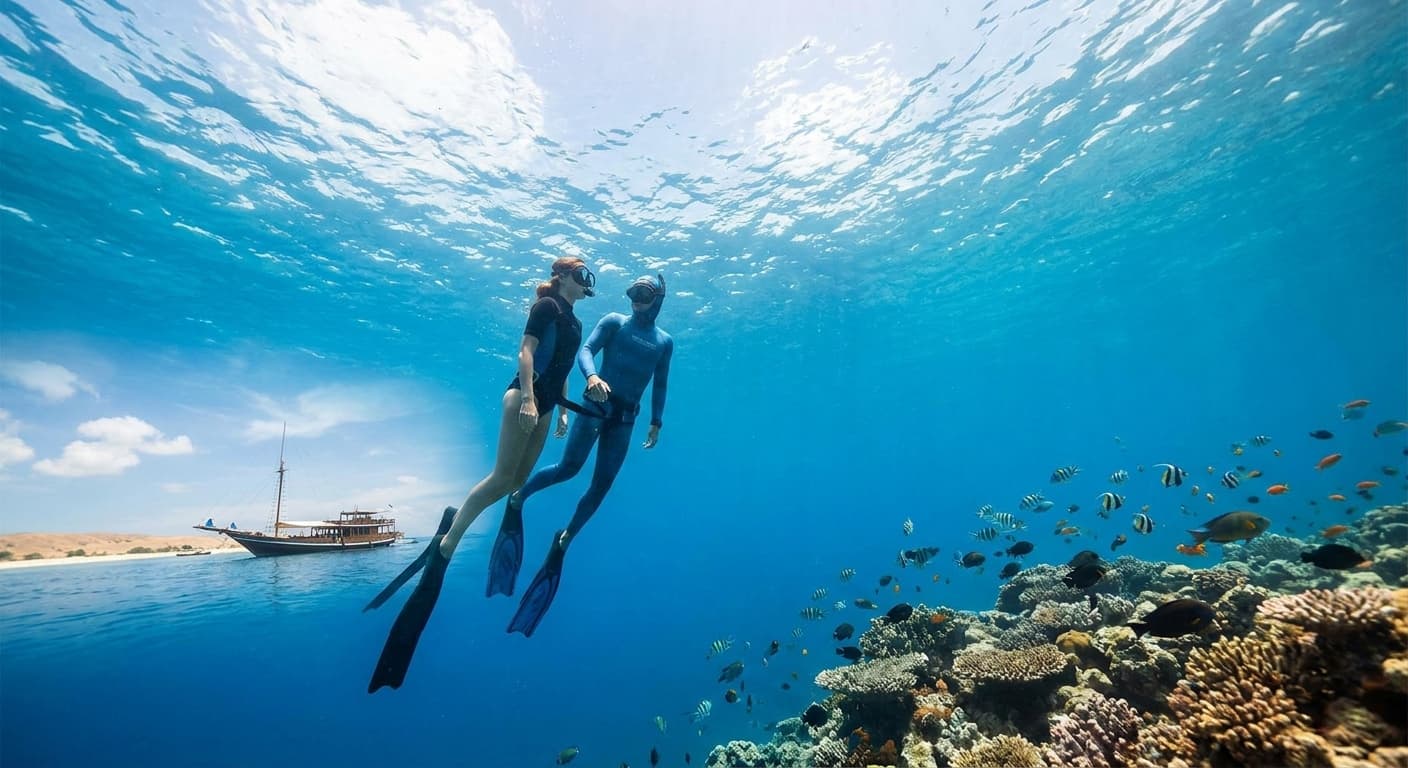
Freediving is the fastest-growing add-on to Red Sea water trips right now, and choosing the right course in Hurghada in 2026 comes down to matching the certification level to your actual comfort in open water, not the flashiest ad you saw.
Why this matters
Freediving in the Red Sea isn't the same as freediving in a pool in your hometown. Water temperature runs 24-28°C depending on the month, visibility on a good day hits 20-30 meters, and the reef walls off Giftun and the Hurghada coastline give you a real depth line to train on instead of a swimming pool floor.
That matters because a course built for flat, warm, shallow water back home won't test the skills you actually need here — current management, thermocline awareness, and equalizing fast enough to keep pace with a drop-off. Daily Red Sea runs the boat trips and scuba excursions that most breath-hold students use to log water time between formal sessions, so the local logistics side is already solved before you book a course.
Who this is for
This guide is for snorkelers who want to go past the surface, scuba divers curious about ditching the tank, and anyone training for a static or dynamic apnea personal best who's landing in Hurghada in 2026 and needs to pick a course level that actually fits their current comfort in the water — not the one with the biggest marketing budget.
Recognized certification body
Stick to AIDA International, Molchanovs, or SSI Freediving — these three run the standardized depth and static targets that dive operators worldwide recognize. A course with no certifying body behind it means your card means nothing the next time you want to freedive somewhere else.
Instructor-to-student ratio
Open water sessions should run at 4:1 or tighter. Anything looser and the instructor can't watch you closely enough during a static breath-hold, which is exactly when a blackout risk shows up.
Progressive training order
A real course builds static apnea first, then dynamic (swimming underwater on breath-hold), then depth work last. If a course jumps straight to depth on day one, the fundamentals aren't there yet and that's a safety gap, not efficiency.
Equalization coaching
Frenzel technique is the single skill that separates a comfortable 10-meter dive from a painful, aborted one at 16 meters. A course that doesn't dedicate real instruction time to equalization is going to cap your progress fast.
Site access and depth line setup
Sheltered bays with a fixed weighted line let you train depth incrementally and safely. Boat-only open water with no line means every dive is improvised, which is fine for advanced freedivers and risky for beginners.
Safety protocol and blackout drills
Every certified course should run a recovery drill for shallow water blackout before anyone goes near a depth line. If that drill isn't on the schedule, that's a red flag regardless of how good the instructor seems.
Build water time before your course
Browse Hurghada boat and dive trips to log comfortable water hours first.
Top picks by course format
The safe pick: Discover Freediving / Level 1 (AIDA 2 or SSI Level 1). Static apnea target of 1:30 to 2:00 minutes, depth target around 16 meters, course length 2 to 3 days. This is the entry point for anyone who's never held a breath-hold line before. Buy — this is where every beginner should start in 2026, no exceptions.
The crossover: scuba-to-freediving bridge. If you've already done a beginner scuba program, you're already comfortable with mask clearing and ear equalization at depth, which cuts pool-confidence time roughly in half compared to a total newcomer. Pairing this course with the scuba diving courses in Hurghada for beginners program gives you a full progression from tank to breath-hold in one trip. Consider — strong option if you're already certified for scuba.
The taster: a snorkeling day before you commit. Half a day of relaxed in-water time tells you fast whether breath-hold comfort is there before you sign up for a multi-day course and a course fee. The snorkeling trips for first-time visitors format is built exactly for this kind of low-pressure water orientation. Consider — good for anyone unsure if freediving is even for them.
The wildcard: AIDA 3 / advanced level. Depth target jumps to 24-32 meters, static target climbs past 2:30, and this level assumes you're already confident diving to 10 meters unassisted. Buy if you've already logged a Level 1 or 2 certification. Skip if you're coming in with zero breath-hold experience — this level will frustrate rather than build you.
What to avoid
• One-day "certification" with no pool session — real Level 1 training takes 2-3 days minimum; anything faster is skipping the fundamentals
• Groups larger than 6 per instructor in open water — the ratio matters more here than in scuba because static breath-hold requires close, continuous supervision
• Courses that skip medical screening — a basic health questionnaire before day one is standard, not optional, for any certifying body worth using
One last thing
The skill that separates a comfortable freediver from a frustrated one isn't lung capacity — it's Frenzel equalization speed, and that's the one thing a course can't compress into a single afternoon no matter how good the marketing looks. Spend the extra half-day on equalization drills before you touch a depth line, and the rest of the course gets dramatically easier.
Frequently asked questions
What's the best freediving course in Hurghada for beginners in 2026?
A Level 1 course certified by AIDA International, Molchanovs, or SSI Freediving is the right starting point in 2026. It builds static apnea and equalization before any depth work, which is the safest progression for someone who's never trained a breath-hold before.
How deep do you go in a beginner freediving course?
Level 1 courses target around 16 meters of depth by the end of training. That target scales up with certification level, reaching 24 to 32 meters at AIDA 3.
Is freediving harder than scuba diving?
Freediving demands more breath control and equalization speed since you're descending on a single breath instead of a tank supply. Scuba divers who cross over often find the equalization skills transfer, cutting their learning curve roughly in half.
Do I need to know how to swim to take a freediving course?
Yes, basic swimming comfort in open water is required before any certifying body will enroll you in a Level 1 course. If you're unsure of your comfort level, a snorkeling orientation day is a lower-pressure way to test the water first.
How long is a freediving course in Hurghada?
A proper Level 1 course runs 2 to 3 days, combining pool or confined-water sessions with open water depth training. Courses that compress this into a single day are usually skipping the static and dynamic fundamentals.
What's the instructor-to-student ratio for a safe freediving course?
4:1 or tighter is the standard for open water sessions in 2026. A looser ratio means the instructor can't watch each student closely during static breath-holds, which is when blackout risk is highest.
Can I do a freediving course if I'm already scuba certified?
Yes, and it's often faster since you already have mask clearing and equalization comfort at depth. The scuba-to-freediving crossover format is built specifically for divers making this switch.
What should I avoid when picking a freediving course?
Avoid any course that skips a pool session, runs groups larger than 6 students per instructor, or doesn't include a basic medical screening before day one. These are the three most common shortcuts that compromise safety.