September 16, 2026
Desert Safari Tours for Film Crews: 2026 Guide
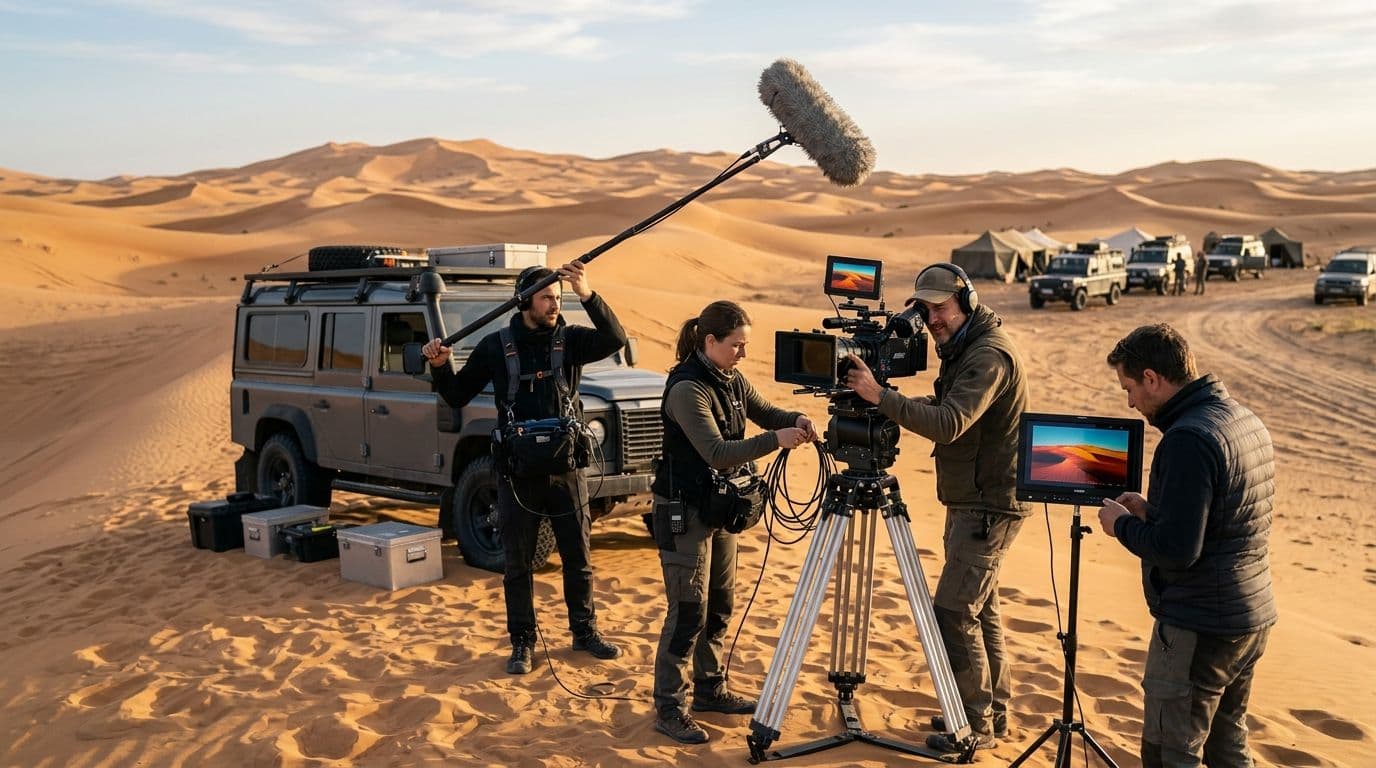
Desert safari tours for film production crews are logistics-first location bookings built around permit access, controlled light windows, and vehicle convoys rather than a tourist sunset ride. A crew needs continuity across multiple takes, generator or power access for lighting rigs, and a fixer who understands Egyptian desert access rules — none of which a standard two-hour quad bike package is built to handle. Daily Red Sea runs desert safaris out of Hurghada that can be scoped for production use, but the booking conversation looks nothing like a typical excursion request. TL;DR • Desert safari tours for film production crews need permit lead time, not same-day booking — plan 2-4 weeks out. • Group day-rate negotiation beats per-person pricing for any crew larger than 6 people. • Night and pre-dawn windows around Hurghada give the cleanest light for desert scenes shot in 2026. • Convoy logistics for gear-heavy shoots require 4x4 support vehicles booked separately from the talent transport. • A scouted, pre-cleared dune location beats an improvised stop every time continuity matters.
Why desert safari logistics matter for film production crews
A tourist desert safari is priced and scheduled around a fixed loop: pickup, dune bashing, Bedouin camp, dinner, return. A production shoot breaks every part of that loop. Crews need to hold a location for hours, sometimes across two days for continuity, and they need the operator to know in advance that a generator truck, a stills team, and a director's monitor cart are coming along with the vehicles.
Hurghada's desert terrain gives film crews genuine variety inside a short drive radius — flat sand plains for wide shots, rock outcrops for texture, and dune fields for silhouette work at golden hour. That variety is the reason production crews specifically search for desert safari access here rather than defaulting to Sinai or the Western Desert, where permit friction runs higher.
Scout the location before you commit a shoot day
A phone call is not a scout. Crews that skip an in-person or video-relay scout end up discovering mid-shoot that the dune angle they wanted faces the wrong direction for the light window they booked.
• Request a daytime AND a golden-hour visit to the same site
• Confirm vehicle access points for heavy gear, not just passenger 4x4s
• Check mobile signal strength if remote monitoring or live feeds are needed
• Note nearest shade structure for cast and crew between takes
• Flag any competing tour traffic that could enter frame
Lock permits and access windows early
How to choose a desert safari in Hurghada walks through the operator vetting questions that matter even more for a production booking, since a crew can't afford a last-minute route change.
• Confirm exclusive-use windows in writing, not verbal agreement
• Ask who holds responsibility for military or checkpoint zone clearance
• Build in a 24-hour buffer day in case of weather or access delay
• Get the operator's insurance and liability terms for equipment on-site
Negotiate a group day-rate instead of per-person pricing
Standard desert safari pricing is per-head. A 12-person crew with three vehicles and a generator truck needs a different structure entirely, and most Hurghada operators will build one if asked directly rather than quoted the tourist rate.
• Ask for a flat day-rate covering vehicles, guides, and camp access
• Separate equipment-vehicle costs from passenger-vehicle costs
• Confirm what a second shoot day costs versus a fresh booking
• Get overtime terms in writing if the shoot runs past sunset
Build the shot list around Hurghada's actual light
Desert light in this part of Egypt shifts fast. Midday sun flattens texture and pushes temperatures past what most crews can work comfortably in; the two-hour windows around sunrise and sunset carry almost all the usable contrast for wide desert shots.
• Schedule wide establishing shots for the first hour after sunrise
• Reserve midday for interior tent shots or dialogue-heavy scenes
• Hold silhouette and horizon shots for the final 45 minutes before sunset
• Check the month's sunset time in advance — it shifts by over an hour between winter and summer bookings
Plan crew logistics beyond the shoot itself
A full production day in the desert means feeding, hydrating, and resting a crew of people who are not used to sand and heat. This is also where downtime planning matters — a crew held on standby for hours between setups needs something structured to do that isn't sitting in a van.
Crews on longer Egypt shoots sometimes build a short off-day activity block into the schedule specifically to reset morale between long location days, the same logic behind team building activities for crews used on other high-pressure production schedules. A half-day break with a structured group activity costs less in crew fatigue than pushing straight through a five-day shoot without one.
• Book shaded rest areas near the shoot zone, not just at the start point
• Confirm potable water volume per person for a full production day
• Arrange a hot meal delivery timed to the midday light gap
• Set a clear evacuation plan for heat-related crew issues
Negotiate group rates for the full crew booking
Negotiating group rates for large tour bookings in Hurghada covers the mechanics that apply directly to production bookings — the leverage points are volume, repeat bookings, and off-peak scheduling.
• Ask for a multi-day rate if the shoot spans more than one date
• Bundle transfers, desert access, and camp use into one negotiated quote
• Confirm cancellation terms specific to weather-dependent shoot days
• Get everything in a written quote before the production calendar locks
Schedule night shoots around real desert darkness
Hurghada's desert sits far enough from city light pollution to shoot clean night skies, which matters for any crew working stargazing or night-exterior scenes. Desert safari for photographers at night in Hurghada covers the access and timing details specific to after-dark bookings.
• Confirm moon phase before locking a night shoot date — a full moon washes out star fields
• Book a generator or battery lighting rig separate from the vehicle convoy
• Set a hard stop time with local guides for safety in unlit terrain
• Test camera gear for sand and cold-night condensation before the shoot night
Comparison: desert safari options for film production crews
| Option | Best for | Key limitation |
|---|---|---|
| Half-day dune location | Quick B-roll or single-scene pickup shots | Light window is short; no room for reshoots same day |
| Full-day Bedouin camp shoot | Dialogue scenes needing shade and a fixed set | Camp access shared with tourist groups unless booked exclusive |
| Overnight desert camp shoot | Night exteriors, stargazing scenes, sunrise-to-sunset coverage | Requires generator and cold-night gear planning |
| Private custom-scouted location | Continuity across multi-day shoots with specific framing needs | Longer lead time to secure exclusive access |
Verdict: a full-day exclusive booking with a written access agreement is the safest default for most production crews shooting in the Hurghada desert in 2026 — it gives enough light-window flexibility without the added cold-weather gear planning an overnight shoot demands.
Common mistakes film crews make booking desert safaris
• Booking the tourist package instead of a custom quote. Standard desert safari pricing assumes a passenger group, not a gear convoy with a generator truck.
• Skipping the scout visit. A location that looks right in photos can face the wrong direction for the light window the shoot needs.
• Underestimating heat on cast in costume. Midday desert heat in Hurghada regularly runs hot enough to force wardrobe and makeup delays that were never budgeted into the schedule.
• Not confirming exclusive access in writing. Tourist convoys can enter frame mid-take if the booking wasn't locked as exclusive-use.
• Ignoring sand exposure on gear. Lenses, drives, and lighting rigs need a dust plan before the first take, not after equipment starts failing.
Scope your desert location shoot
Get a custom quote built around your crew size and shoot schedule.
Plan your safari
One last thing
The biggest scheduling error production crews make in Hurghada isn't the shoot itself — it's underestimating how fast the light window closes. Golden hour here runs roughly 45 minutes, not the hour crews sometimes budget from experience shooting further north, and a five-minute setup delay can cost the entire wide shot for the day.
Related guides
• Corporate retreat packages combining diving and desert safari
• Team building desert safaris for corporate groups in Hurghada
Frequently asked questions
How far in advance should a film crew book a desert safari in Hurghada?
Book 2-4 weeks ahead for a standard exclusive-access shoot in 2026, longer if the shoot needs permit clearance for restricted zones. Same-day tourist bookings won't guarantee exclusive access.
Can a production crew get exclusive access to a desert location?
Yes, most Hurghada operators will lock exclusive-use windows for production bookings when asked directly and confirmed in writing. Verbal agreements without a written quote are the most common source of on-set surprises.
Is night shooting possible in the Hurghada desert?
Yes, the desert sits far enough from city light pollution for clean night-sky footage, and overnight camp bookings support sunset-to-sunrise coverage. Moon phase should be checked before locking a night shoot date.
What vehicles does a film crew need for a desert shoot?
A gear convoy needs 4x4 support vehicles separate from passenger transport for cast and crew. Generator trucks and lighting rigs typically need their own vehicle booked in advance.
How hot does it get shooting midday in the Hurghada desert?
Midday desert heat regularly forces wardrobe and makeup delays, which is why most shot lists reserve interior or shaded scenes for the midday gap. Wide exterior shots are scheduled for the two hours after sunrise and before sunset instead.
Does a desert safari operator provide liability coverage for equipment?
Terms vary by operator, so liability and insurance coverage for production equipment on-site should be confirmed in writing before the shoot date. This is one of the first questions a production coordinator should raise during quote negotiation.
What's the difference between a tourist desert safari and a production booking?
A tourist safari is priced per person on a fixed loop; a production booking needs a custom day-rate covering exclusive access, gear vehicles, and a written access agreement. The negotiation process and lead time both look different.
Can a desert safari be combined with other Hurghada locations in one shoot schedule?
Yes, crews often pair a desert day with a coastal or historical location day to cover more ground in one production trip to the Red Sea region.