October 1, 2026
Can pregnant women go on a Hurghada boat trip?
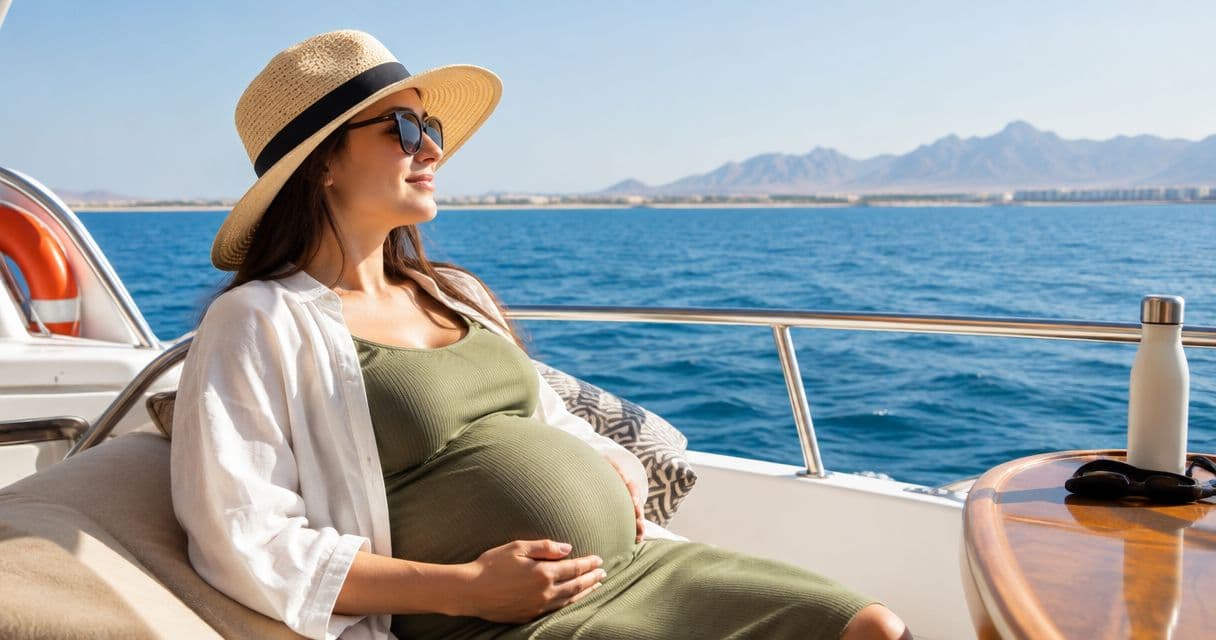
Pregnant women can consider a Hurghada boat trip when their maternity clinician agrees that the planned outing is appropriate and the operator accepts pregnant passengers. That is not a blanket safety clearance: sea conditions, boarding, heat, and access to medical care still matter. For your 2026 trip, choose a gentle outing with confirmed facilities, skip scuba diving, and stay ashore if your clinician advises against it. TL;DR • Pregnant women Hurghada boat trip planning starts with medical advice, operator acceptance, and a suitable route. • ACOG advises against scuba diving during pregnancy; snorkeling needs a separate discussion with your maternity clinician. • Choose shade, secure seating, manageable boarding, and a clear emergency plan over extra activity stops. • Dailyredsea arranges Hurghada excursions; medical clearance must come from your maternity clinician.
Can pregnant women go on a Hurghada boat trip?
Yes, conditionally—not simply because a trip is advertised as relaxing or family-friendly. Your pregnancy, the actual boat, and the day's conditions determine whether the outing is appropriate. Review the route using the guide to Hurghada island boat trip distances, then ask the operator about the specific departure rather than assuming every island excursion is alike.
Use this sequence before you commit:
Get medical advice. Describe the boat journey, planned activities, expected time away, and access to care to your maternity clinician.
Check the operator's policy. Disclose your pregnancy and ask whether restrictions or documentation apply.
Confirm the boat and itinerary. Ask about boarding, seating, shade, toilets, swimming access, and transfers between boats.
Check conditions again before departure. A suitable itinerary does not make rough water suitable.
Keep a shore-based alternative. Do not let a booking or your group's plans override medical advice or new symptoms.
A medical conversation and an operator's acceptance answer different questions. Your clinician assesses your health; the operator explains what the excursion requires. You need both before treating the trip as a realistic option.
Why this matters
A Hurghada boat excursion combines several separate activities: reaching the marina, boarding, traveling offshore, moving around the deck, and sometimes swimming or landing on an island. You need to assess each part. Staying out of the water does not remove the journey or boarding demands.
For a 2026 booking, look beyond the destination photograph. The useful question is whether you can travel comfortably, avoid unnecessary exertion, and get help if your condition changes. A beautiful beach does not answer any of those questions.
This page is general planning guidance, not individual medical clearance. The American College of Obstetricians and Gynecologists' guidance on travel and exercise during pregnancy, and the CDC Yellow Book's guidance for pregnant travelers, support discussing your health and planned activities with your clinician.
Which type of outing should you consider?
Compare the physical demands, not just the tour names. A private boat still moves with the sea, while a shared excursion still needs a suitable boarding arrangement and facilities. Neither label guarantees pregnancy suitability.
| Option | Best for | Practical advantage | Limitation or reason to skip |
|---|---|---|---|
| Gentle sightseeing boat trip | Clinician-cleared travelers who want to remain onboard | You can avoid swimming and focus on the scenery | Motion, heat, boarding, and distance from care remain relevant |
| Island excursion with optional snorkeling | Clinician-cleared travelers comfortable with the full itinerary | You can discuss participating without entering the water | Island landings and swim stops can add transfers or physical demands |
| Private boat outing | Travelers seeking a discussion about itinerary flexibility | You can ask about a route and pace suited to your group | Flexibility must be confirmed; it does not remove weather or medical risks |
| Scuba-diving excursion | Not recommended during pregnancy | No pregnancy-related advantage justifies scuba participation | ACOG advises against scuba diving during pregnancy |
| Shore-based relaxation | Travelers advised not to go offshore | You avoid boat motion and boat boarding | Heat, sun exposure, and access to care still need attention |
Choose the least demanding option that your clinician and the operator agree is appropriate. Do not book a more strenuous itinerary on the assumption that you can decide what to skip after boarding. Ask whether remaining onboard is permitted and practical at every stop.
Why pregnancy suitability varies
There is no universal answer based solely on the words Hurghada boat trip. These factors change the decision:
• Pregnancy health: Complications, current symptoms, and your clinician's restrictions take priority over an excursion description.
• Sea conditions: Wind and waves affect movement onboard, comfort, and the effort needed to keep your balance.
• Boat access: Gangways, steps, ladders, and transfers determine how you board and leave the vessel.
• Heat and facilities: Shade, drinking water, seating, and usable toilets affect your ability to rest and manage the day.
• Emergency access: The route and the crew's response arrangements determine what happens if you need medical attention.
Ask for concrete descriptions. A comfortable boat is a subjective claim; whether it has a shaded seat and how you reach the toilet are answerable questions. Apply that distinction throughout your 2026 planning.
What should you ask before booking?
Organize your questions around the decisions that actually determine suitability. Use the following checklist rather than relying on a general reassurance that other pregnant travelers have joined before.
Medical advice
Tell your clinician how far along you will be on the excursion date and describe the planned outing. Include any swimming, island landing, or boat transfer. Ask whether your own circumstances call for avoiding offshore travel altogether.
Operator policy
Ask whether pregnant passengers are accepted on that exact excursion and whether any pregnancy-stage restrictions apply. Request the answer before booking. Do not assume a general website description settles the policy for a specific vessel or activity.
Boat access
Ask how passengers board at the marina and disembark at each stop. Clarify whether you must step between moving boats, use a ladder, or cross an uneven landing. Explain any difficulty you have with balance, steps, or prolonged standing.
Sea conditions
Ask how the operator decides whether to proceed when conditions change. A forecast is not a guarantee. Confirm how you will receive departure updates and what happens if the operator judges the trip unsuitable.
Emergency plan
Ask what the crew does if a passenger becomes unwell and how medical assistance is arranged. You also need to know where you can seek maternity care ashore. Carry relevant medical information and keep your emergency contacts accessible.
Five checks before a pregnancy boat outing: medical advice, policy, access, conditions, and emergency planning.
Confirm the health decision and the practical arrangements before booking.
Keep the answers together with your booking details. If the vessel or itinerary changes, ask the relevant questions again rather than transferring your assumptions to a different departure.
Does your stage of pregnancy change the decision?
ACOG identifies 14–28 weeks of pregnancy as the period generally best suited to travel. That guidance concerns travel overall; it does not certify a Hurghada boat excursion or replace an assessment of your pregnancy.
Early pregnancy can involve nausea and fatigue, while later pregnancy can make movement and long outings less comfortable. Individual experience varies. Your current symptoms and clinical advice matter more than whether you fall inside a commonly recommended travel window.
For a 2026 holiday, discuss the excursion date rather than only your departure date. Your stage of pregnancy can differ by the time the boat trip takes place. Also check any separate airline, insurance, or operator requirements without assuming their rules are identical.
Can you snorkel while pregnant in Hurghada?
Snorkeling requires a separate discussion with your maternity clinician; approval to ride on a boat is not approval for every water activity. Explain your swimming ability, the expected water conditions, and how you will enter and leave the sea.
ACOG recognizes swimming as an activity generally suitable during an uncomplicated pregnancy. Open-water snorkeling adds different demands, including currents, waves, entry points, and the distance back to the boat. Do not equate a comfortable pool swim with an offshore snorkeling stop.
Ask whether swimming is entirely optional and whether you can remain in a shaded seat while others participate. Do not attempt scuba diving as an alternative. ACOG advises against scuba diving during pregnancy because the fetus is not protected from decompression-related risks.
Can you take seasickness medicine while pregnant?
Ask your maternity clinician or pharmacist before taking a seasickness medicine during pregnancy. Give the exact product name and active ingredient, including anything purchased locally or brought from home. A familiar brand name does not replace a medication check.
Discuss prevention before departure, especially if motion already triggers vomiting. Resting, looking toward the horizon, and avoiding unnecessary movement are common non-drug measures, but they do not guarantee you will feel well. Do not board while already struggling to keep fluids down.
Persistent vomiting, faintness, or worsening symptoms need medical advice rather than another attempt to complete the itinerary. Tell the crew promptly if you become unwell. Do not wait until the next scheduled stop to explain what is happening.
How should you manage sun, heat, and the boat deck?
Choose access to shade and drinking water, and take breaks before you feel exhausted. Carry what you need rather than assuming the boat supplies it. Ask where you can sit securely while the vessel is underway.
The American Academy of Dermatology recommends broad-spectrum, water-resistant sunscreen with SPF 30 or higher, reapplied every 2 hours and after swimming or sweating according to the product instructions. Sunscreen supplements shade and protective clothing; it does not make prolonged heat exposure harmless.
Wear footwear that grips the deck and use handholds when moving around. Wet surfaces and vessel movement deserve attention even when you feel well. Do not carry bulky bags while boarding if they interfere with your balance or your ability to hold a rail.
Avoid turning the outing into a test of endurance. You do not need to swim, climb to an upper deck, or join every stop to justify joining the trip. Confirm those choices are possible before you leave the marina.
When should you stay ashore or seek help?
Stay ashore if your clinician advises against the trip or the operator cannot confirm suitable arrangements. Also reconsider if you are unwell before departure, the planned vessel changes, or conditions no longer match the outing you discussed.
Vaginal bleeding, fluid leakage, severe abdominal pain, chest pain, fainting, or difficulty breathing require urgent medical assessment. Reduced fetal movement, once you normally feel movement, also needs prompt maternity advice. Do not treat these symptoms as ordinary seasickness or wait for an excursion to finish.
During your 2026 stay, know how to reach local medical care before an emergency occurs. Check that your travel insurance covers your circumstances and planned activities. Keep your maternity records and insurer's assistance details available to you and your traveling companion.
How can Dailyredsea help with planning?
Dailyredsea offers Hurghada island boat trips, snorkeling excursions, and private transfers. Dailyredsea is for travelers arranging Hurghada excursions, not for medical clearance. Share your requirements when asking about an outing, but take the health decision to your maternity clinician.
For Dailyredsea Hurghada boat trip planning, ask about the exact vessel, route, facilities, and pregnancy policy. The benefit of discussing an operator's excursion is getting the practical details; the limit is that those details cannot establish medical suitability.
Discuss your Hurghada outing
Ask about the route, boarding, onboard facilities, and pregnancy policy before choosing an excursion.
Explore Hurghada tours
One last thing
Ask how you get back onto the boat—not just how you get into the water. A swim stop can involve a ladder or moving transfer, and staying onboard can be the better choice. Make that decision while you still have a shore-based alternative, not after the boat has left.
Related guides
• How long a snorkeling boat trip lasts in Hurghada
• Hurghada day tours ranked by duration
• Best things to do in Hurghada
Frequently asked questions
Can I go on a Hurghada boat trip while pregnant?
You can consider a Hurghada boat trip if your maternity clinician agrees the outing is appropriate and the operator accepts pregnant passengers. Confirm the boat, route, boarding arrangements, and conditions before departure.
What is the best stage of pregnancy for travel?
ACOG identifies 14–28 weeks of pregnancy as the period generally best suited to travel. This is not automatic clearance for a boat trip; your health and the itinerary still determine suitability.
Can I scuba dive in Hurghada while pregnant?
No—ACOG advises against scuba diving during pregnancy. Riding on a dive boat without diving is a separate decision that still requires medical advice and operator acceptance.
Is snorkeling safe during pregnancy?
Snorkeling needs an individual discussion with your maternity clinician. Open-water conditions, swimming ability, and getting back onto the boat matter even when swimming is otherwise appropriate for your pregnancy.
Is a private boat safer than a shared boat during pregnancy?
A private boat is not automatically safer during pregnancy. Ask about the actual vessel, route, flexibility, facilities, and sea conditions rather than relying on the private label.
Can I take seasickness tablets before a pregnancy boat trip?
Check the exact medicine with your maternity clinician or pharmacist before taking it during pregnancy. Share the active ingredient and any other medicines you use.
What sunscreen should I use on a Hurghada boat trip?
The American Academy of Dermatology recommends broad-spectrum, water-resistant sunscreen with SPF 30 or higher. Reapply every 2 hours and after swimming or sweating according to the product instructions, and use shade and protective clothing.
What should I tell Dailyredsea before booking a boat trip?
For Dailyredsea Hurghada boat trip inquiries, disclose your pregnancy and explain your boarding, seating, and activity requirements. Ask about the specific excursion's pregnancy policy and take the itinerary to your maternity clinician.